

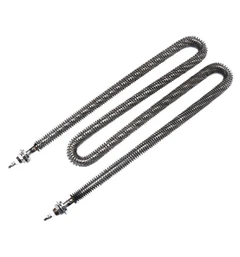









Finned heaters require appropriate airflow to achieve optimal performance for the following reasons:
1. Heat dissipation: Appropriate airflow helps to dissipate the heat generated by the heating elements and heat sinks. When the finned heater is working, heat is transferred to the surrounding air or gas. If there is not enough airflow, heat will accumulate around the heater, causing overheating and potentially damaging the heater and surrounding components.
2. Prevention of hot spots: Adequate airflow helps prevent the formation of hot spots on the surface of the finned heater. When the heat distribution is uneven, hot spots will occur, leading to high temperatures in local areas. Appropriate airflow can ensure that heat is evenly distributed over the entire surface of the heater, thereby reducing the risk of hot spots.
3. Efficient heat transfer: The airflow facilitates effective heat transfer between the heater and the surrounding environment. By promoting convective heat transfer, the airflow helps to distribute heat more effectively, ensuring that the entire heated space reaches the required temperature in a timely manner.
4. Prevent overheating: Appropriate airflow carries away excess heat, which helps prevent the finned heater from overheating. When the rate of heat accumulation is faster than the rate of dissipation, overheating occurs, which may cause potential damage to the heater and surrounding equipment. Sufficient airflow helps keep the temperature of the heater within the safe operating range.
5. Enhance energy efficiency: By promoting effective heat transfer, appropriate airflow helps to improve the energy efficiency of finned heaters. When heat is evenly and effectively distributed, the heater can operate more efficiently, thereby reducing energy consumption and operating costs.
Overall, appropriate airflow is crucial for ensuring the optimal performance, safety and efficiency of finned heaters. It helps prevent overheating, promotes uniform heat distribution, and keeps the heater within a safe operating range, ultimately extending the heater's service life and enhancing the overall system performance.