










Why Choose Us
Reliable Product Quality
We strictly checked on selecting material, processing, debugging and testing so as to provide the products best in quality for customers. We are going to stick to the principle of quality the fist, customers the foremost.
Wide Product Range
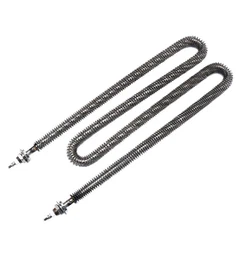
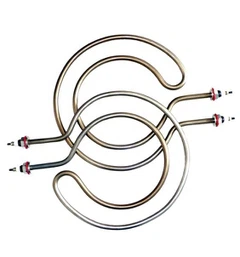
The main products contain immersion heating element, cartridge heating element, Finned heating element, Oven heating element, Ceramic heating element, Mica heating element, Washing Machine heating element. Band heating element, water heater thermostat. Heating Element Flange.
Rich Experience
ETDZ is established in the year 1986 ,own and operate several productive investment enterprises and also has established Ningbo Commercial Do Brasil Ltda., ETDZ HOLDINGS (Cambodia) Co., Ltd. and UNIFAME INDUSTRY LIMITED etc. Now it is a specialized developer and manufacturer of various kinds of heating element and thermostat.
Professional Technical Team
Our research and development department is constantly improving on current designs and techniques to take advantage of the latest in technology and apply these processes into your heating applications to make your heaters more durable and cost efficient. Our knowledge base and experienced sales executives can offer many suggestions and alternatives to your current heating projects so you can make a well informed decision with several alternative solutions.
What Is Ceramic Heating Element?
Ceramic heating element is a resistive piece of ceramic, often treated with a metallic coating. The ceramic heating element creates heat based on resistance to electrical flow through the ceramic element. This is done to provide heat to a room or other area via convection or forced air.
-
![Channel strip heater for industry]() Channel strip heater for industryDescription Strip heaters are used principally for convection-type air heating and clamp-on installations. When selecting strip heaters for either, two important factors must be considered: The proper sheath material for resisting any...view more
Channel strip heater for industryDescription Strip heaters are used principally for convection-type air heating and clamp-on installations. When selecting strip heaters for either, two important factors must be considered: The proper sheath material for resisting any...view more -
![Ceramic Band Heater For Pelletizer]() Ceramic Band Heater For PelletizerDescription 240V 2000W Ceramic Band Heater is a kind of high temperature and long life heater, ceramic heater can adapt higher and higer working temperature requirement in the modern industry.Especially chemical fiber, engineering...view more
Ceramic Band Heater For PelletizerDescription 240V 2000W Ceramic Band Heater is a kind of high temperature and long life heater, ceramic heater can adapt higher and higer working temperature requirement in the modern industry.Especially chemical fiber, engineering...view more -
![Ceramic Heater Band For Injection Molding Machine]() Ceramic Heater Band For Injection Molding MachineDescription Ceramic heater band for injection molding machine is made of stainless steel skin shell, inner side there are ceramic high insulation fire-resistance, and then made of mechanical twist, connected to the power supply, can be...view more
Ceramic Heater Band For Injection Molding MachineDescription Ceramic heater band for injection molding machine is made of stainless steel skin shell, inner side there are ceramic high insulation fire-resistance, and then made of mechanical twist, connected to the power supply, can be...view more -
![Full arc ceramic panel heater]() Full arc ceramic panel heaterDescription Ceramic infrared heater elements consist of resistive thermal conductors fully embedded in the appropriate ceramic material. Fully embedded in the ceramic, the energy generated by the conductor can be transferred to the...view more
Full arc ceramic panel heaterDescription Ceramic infrared heater elements consist of resistive thermal conductors fully embedded in the appropriate ceramic material. Fully embedded in the ceramic, the energy generated by the conductor can be transferred to the...view more -
![Sauna Ceramic Infrared Heating Element]() Sauna Ceramic Infrared Heating ElementDescription Sunlight contains various light frequency waves. The normal absorption of resonant frequency for human body is 4 to 14um. This frequency wave band is called Far Infrared Wave, it can penetrate the human body of 2 to 3 um,...view more
Sauna Ceramic Infrared Heating ElementDescription Sunlight contains various light frequency waves. The normal absorption of resonant frequency for human body is 4 to 14um. This frequency wave band is called Far Infrared Wave, it can penetrate the human body of 2 to 3 um,...view more -
![Ceramic Heating Element For Sauna]() Ceramic Heating Element For SaunaDescription Insulation Material:Ceramic Conductor Material:Nichrome Wire Power(W):20~1000W Length(mm):10~1000mmL Voltage(V):220 volts, 380 volts, 110 volts Wave Length:3 - 50 um The two heads of the ceramic heating element for sauna are...view more
Ceramic Heating Element For SaunaDescription Insulation Material:Ceramic Conductor Material:Nichrome Wire Power(W):20~1000W Length(mm):10~1000mmL Voltage(V):220 volts, 380 volts, 110 volts Wave Length:3 - 50 um The two heads of the ceramic heating element for sauna are...view more -
![Ceramic infrared heating panels]() Ceramic infrared heating panelsDescription Type:Trough,Hollow ,Flat Wattage:125-1000W Size:245*80mm,245*60mm,122*122mm,122*60mm,80*80mm Other size can be customized 220v infrared ceramic plate heating element is efficient, robust heaters which provide long wave...view more
Ceramic infrared heating panelsDescription Type:Trough,Hollow ,Flat Wattage:125-1000W Size:245*80mm,245*60mm,122*122mm,122*60mm,80*80mm Other size can be customized 220v infrared ceramic plate heating element is efficient, robust heaters which provide long wave...view more -
![ARC Ceramic Infrared Heating Element]() ARC Ceramic Infrared Heating ElementDescription ARC Ceramic Infrared Heating Element have a cast-in nichrome resistance wire operating at temperatures between 300 and 750oC. The glazed ceramic surface protects it from oxidation or corrosion. The ceramic element is...view more
ARC Ceramic Infrared Heating ElementDescription ARC Ceramic Infrared Heating Element have a cast-in nichrome resistance wire operating at temperatures between 300 and 750oC. The glazed ceramic surface protects it from oxidation or corrosion. The ceramic element is...view more -
![Industrial IR Ceramic Heater]() Industrial IR Ceramic HeaterIndustrial Ceramic Heating Element Product introduction The Industrial Ceramic Heating Element is a source of thermal radiation that produces a heat radiation similar to natural sunlight. The long-wave infrared heat radiation generated...view more
Industrial IR Ceramic HeaterIndustrial Ceramic Heating Element Product introduction The Industrial Ceramic Heating Element is a source of thermal radiation that produces a heat radiation similar to natural sunlight. The long-wave infrared heat radiation generated...view more -
![Ceramic Infrared Heating Element]() Ceramic Infrared Heating ElementDescription Ceramic Infrared Heating Element is a source of thermal radiation that produces a heat radiation similar to natural sunlight. The long-wave infrared heat radiation generated by the radiator can effectively raise and maintain...view more
Ceramic Infrared Heating ElementDescription Ceramic Infrared Heating Element is a source of thermal radiation that produces a heat radiation similar to natural sunlight. The long-wave infrared heat radiation generated by the radiator can effectively raise and maintain...view more -
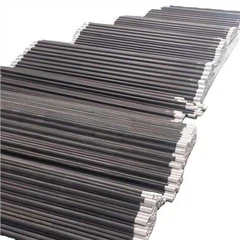
![Ceramic Rod Silicon Carbide Heating Element]() Ceramic Rod Silicon Carbide Heating ElementDescription Silicon carbide heating elements belong to the high-temperature heater category and are made of green silicon carbide containing about 99% SiC. Silicon carbide heaters are used in oxidizing environments with temperatures up...view more
Ceramic Rod Silicon Carbide Heating ElementDescription Silicon carbide heating elements belong to the high-temperature heater category and are made of green silicon carbide containing about 99% SiC. Silicon carbide heaters are used in oxidizing environments with temperatures up...view more -
![MCH Thermal Ceramic Micro Electric Heating Element]() MCH Thermal Ceramic Micro Electric Heating Element• High hardnessview more
MCH Thermal Ceramic Micro Electric Heating Element• High hardnessview more
• Wear & abrasion resistant
• High compressive strength


Safety
Ceramic heating elements don’t use propane, kerosene or other fuel types, so they don’t produce fumes. These heaters have ceramic plates covering the heating elements, which means you won’t have to worry about sparks. Most ceramic heating elements have internal fans that prevent them from overheating. Many have tilt-detection features that shut them off if they fall over. Still, turning your heater off is always safer when you aren’t using it or when you go to sleep.
Portability
These heaters are often compact and easy to move from room to room. Despite their small size, they usually heat rooms quickly. Some ceramic heating elements have built-in handles or wheels.
Energy-efficiency
Ceramic heating elements warm up quickly and store heat in the ceramic material surrounding the heating elements. Many reduce their energy usage once the ceramic material is hot, making them more energy-efficient than other types of heaters. Some have built-in timers that turn them off automatically, making it easier to conserve energy.
They can heat large rooms
Despite their small size, many ceramic heating elements are capable of heating large rooms, even those with high ceilings. Some have oscillating features that let them heat large rooms more evenly. Those with built-in fans can push heat further than those without fans. In many cases, ceramic heating elements with fans can circulate heat from the highest point in the room to the lowest point in the room. Still, depending on the room size, you may need multiple heaters.
Quiet operation
Certain heaters can be noisy and distracting. Luckily, most ceramic heating elements are relatively quiet. Those with fans tend to be louder than those without but are still fairly quiet compared to other types of heaters.
Types of Ceramic Heating Element
Tubular Heaters
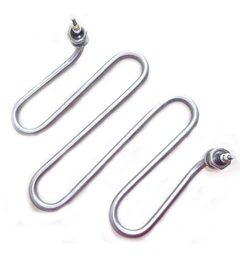
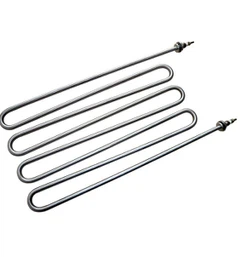
Tubular heaters are made of a resistance wire packed with a ceramic insulator and housed inside a tubular metal sheath body. The ceramic insulator is characterized by high heat conductivity and dielectric strength. It stabilizes the resistance wire mechanically and guards against oxidation and corrosion. As a result, the tubular heater is made safer, more efficient, and less likely to catch fire.
Immersion Heaters
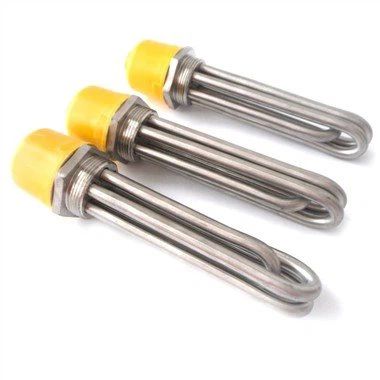
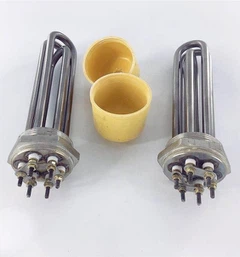
Liquids and gasses can be heated directly in tanks and vessels using immersion heaters intended for this purpose. These heaters are made of several hairpin-shaped heating elements made of tubular material. A resistance wire is also used in the tubular heating elements of flanged immersion heaters, which are housed in a bed of ceramic insulators and a sheath. Convective heating occurs when the fluids touch the metal sheath and raise their temperature.
Material of Ceramic Heating Element
Silicon Carbide (SiC)
Silicon carbide is another material used in making ceramic heating elements. This material is suitable as a heating element because it does not deform at elevated temperatures and it has a low coefficient of thermal expansion. Furthermore, it is chemically inert and is not prone to corrosion or oxidation. Silicon carbide heating elements can generate heating temperatures of up to 1973 K.
Pyrolytic Boron Nitride (PBN)
Both PBN and PG are extremely pure (99.99% or even higher) and very stable in a vacuum or inert atmosphere. The PBN-PG heating element could be very durable and keep the chamber clean. It could be heated to ultra-high 1873K in a very short time without the emission of any gas component. These heating elements are ideal products for the semiconductor industry and applications that require high temperature, high vacuum, and high purity.
Molybdenum Disilicide (MoSi2)
Molybdenum disilicide is a common material for making heating elements. This ceramic-metallic composite has a high melting point and a high oxidation resistance. These properties make it ideal as a heating element in high-temperature furnaces. Molybdenum disilicide heating elements can generate heating temperatures of about 2173 K. It is important to handle these ceramic heating elements with care as they are brittle at room temperature.
Positive Thermal Coefficient Materials (PTC)
With PTC materials, resistance increases to a high degree upon heating. As the name implies, they have a positive thermal coefficient of resistance. This gives PTC materials the ability to act as their own thermostats, regulating the degree to which they heat up. Current does not flow in these materials when they are hot. Typically they can generate heating temperatures of up to 1273 K.
Aluminum Nitride (AlN)
Aluminum nitride is usually used in the manufacture of advanced ceramic heating elements. Ceramic heating elements made from this material typically have high thermal conductivity and high corrosion resistance. In addition, they heat up faster to 873K and there is even thermal distribution.
- A heater intended to keep food items warm would be an illustration of one of these heaters. Instead of indirectly warming the substance through fans or ducts, the heating element warms it directly.
- Immersion heaters can occasionally use ceramic heating components. An immersion heater uses heating elements that can be submerged in a liquid to heat the material in the immediate vicinity.
- Ceramic heating elements are used in numerous industrial and manufacturing applications, such as heaters, ovens, dryers, and furnaces. Products that melt, cook, dry, warm, seal, and reform material can use ceramic heating components.
- Ceramic heating elements are also found in a variety of industrial and consumer goods, including hair dryers, space heaters, toasters, and irons.

Electrical Resistance
Heating elements need to have a high degree of electrical resistance to produce heat. This is one of the reasons superconductors cannot be used as heating elements. Although a ceramic heating element needs to have high electrical resistance, the electrical resistance should not be high enough to make the material an electrical insulator. This is because electric current still needs to pass through a heating element.
Resistance to Oxidation
Heat can cause oxidation in materials. Oxidation can destroy a heating material and reduce its efficiency. This implies that oxidation affects the lifespan of heating elements. Hence, a heating element must be resistant to oxidation. To protect ceramic heating elements from the adverse effects of oxidation, you can coat them with silicon oxide or aluminum oxide.
Temperature Coefficient of Resistance
Usually, as the temperature rises, resistance in the material does the same. Materials that exhibit a rapid rise in resistance as temperature rises are said to have a high-temperature coefficient of resistance. Heating elements must have a low-temperature coefficient of resistance. However, in instances where the amount of change in resistance can be predicted, a high-temperature coefficient of resistance is ideal. This is because a rapid increase in resistance will deliver more power to the heating material.
Ductility
Heating elements need to be ductile so that they can be easily drawn into wires and manipulated into different shapes without a change in efficiency.
Resistance to Deformation
It is expected that a good ceramic heating element can withstand deformation at very high temperatures.
Melting Point
Ceramic heating elements with high melting points are more efficient than those with low melting points. This is because they can generate a high amount of heat without changing their state. One of the advantages of ceramic heating elements over metallic heating elements is that the former has a high melting point.
Working Principles of Ceramic Heating Elements
While there are myriad heating element types available to furnace designers, ceramic heaters generally fall into one of two groups: exposed ceramic rods; or coils, ribbons, and wires of an alloy embedded in a plate of ceramic insulation. At the simplest level, these heating element types operate on the same principle.
The material’s coefficient of electrical resistance determines its ability to generate heat proportional to the amount of current flowing through it. A ceramic heating element’s thermal output, therefore, is determined by its electrical load and its intrinsic resistive properties. Under ideal conditions, the element will resist the flow of current and generate heat which will radiate outwards into the heat treatment chamber. The primary benefit of this compared to combustion is vastly increased efficacy, as 100% of electricity supplied is theoretically converted into heat.
Yet there are numerous interconnected factors that can affect these two underlying properties. Alloy composition, element dimensions, watt loading, voltage, and device architecture are just a selection of these fundamentally important properties.
For example a typical exposed ceramic heating element material is high-purity silicon carbide (SiC), which can be arranged in rods, multi-leg, and spiral-cut heaters. The lengths and diameters of these elements can be customized to specific furnace dimensions, while the outstanding thermomechanical stability of the material means it always retains its rigidity. This simplifies installation of the heater, as it does not need to be mounted on nor embedded into the furnace wall. This reduces the risk that that generated heat will propagate through the furnace to damage sensitive equipment. Silicon carbide ceramic heating elements also boast improved electrical efficiency, converting 100% of all electricity supplied into heat with a shallow drop-off in terms of watt loading.
The drawback of exposed ceramic heating elements comprised of silicon carbide is that the material is not fully densified, which makes it susceptible to cross-reactivity with atmospheric gases at elevated temperatures. These reactions can affect the conductive cross-section of the element, which gradually causes an increase in electrical resistance over time. In fact, the resistance of a silicon carbide ceramic heating element could increase by up to 300% before the end of its service life.
The Science of Ceramic Heating Elements


Resistive Heating at the Molecular Level
The phenomenon of resistive heating can be explained by viewing what happens within the material during the flow of current at the molecular level. When there is a difference in electric potential between two points in a conductor, an electric field is generated, accelerating the free electrons at their outermost shells to move from atom to atom, giving these electrons kinetic energy. The electrons move from a point with a higher potential to a lower one. The rate of electron flow is referred to as the current, an essential electrical parameter.
Extrinsic Property of Resistance
Resistance is an extrinsic property of a material that refers to the opposition to the flow of current or electrons. Being an extrinsic property, it depends on the length (l) and the cross-sectional area (A) of the material, and its value can be calculated by R = ρL/A. In this equation, ρ is the resistivity which is an intrinsic property and varies with the temperature of the material.
Heat Transfer Mechanisms
Ceramic heating elements transfer heat to the surroundings by either conduction, convection, or radiation. Conductive heat transfer involves the transfer of heat between two objects in contact. Convective heat transfer involves the transfer of heat between two fluids (liquids or gasses). In convective space heaters, the air flows through the hot ceramic heating element and increases the ambient temperature. Lastly, in radiative heat transfer, thermal energy through electromagnetic radiation is emitted directly to the objects or persons nearby.
Positive Temperature Coefficient
The resistivity and the resistance vary with temperature. If the resistance of the material increases with increasing temperature, the material has a positive temperature coefficient. Ceramics are semiconducting materials and have a positive temperature coefficient. When the temperature of the ceramic heating element increases to its setpoint temperature due to the uptake of electrical current, the resistance will increase up to infinity which ceases the flow of current and the production of heat. The setpoint temperature depends on the composition of the ceramic.
Common Challenges and Solutions with Ceramic Heating Element
Insulation And Heat Loss
Challenge: One common challenge with ceramic heating elements is insulation and heat loss. Inadequate insulation can lead to heat dissipation, resulting in inefficient heating and energy waste. This can also lead to a longer heat-up time and lower overall performance.
Solution: To address insulation and heat loss issues, it is important to ensure that the ceramic heating element is properly insulated. Check for any gaps or damaged insulation and repair or replace it as needed. Additionally, using high-quality insulation materials and properly securing the band heater to the equipment can minimize heat loss and improve overall efficiency.
Uniform Heat Distribution
Challenge: Uneven heat distribution across the surface of the ceramic heating element can lead to temperature variations and impact the quality and consistency of the heating process. This can result in product defects, improper curing, or incomplete melting.
Solution: To achieve uniform heat distribution, it is crucial to select the right size and configuration of the ceramic heating element for the specific application. Ensure that the band heater is properly fitted and secured to the equipment to maintain good thermal contact. Additionally, regularly inspect the heater for any damage or wear that could impact heat distribution and replace it if necessary.
Contamination And Build-Up
Challenge: These band heaters are susceptible to contamination and build-up, especially in applications where they come into contact with molten materials, adhesives, or corrosive substances. Contamination can reduce the heater’s efficiency, lead to uneven heating, and cause premature failure.
Solution: Implement a regular cleaning and maintenance routine to prevent contamination and build-up. Use appropriate cleaning agents or solvents to remove any residue or deposits on the surface of the heater. Regularly inspect the band heater for any signs of corrosion or damage caused by contaminants and take prompt action to rectify the issue.
Temperature Control And Overheating
Challenge: Maintaining precise temperature control is essential for optimal performance and product quality. Inaccurate temperature control or overheating can lead to overheated zones, thermal stress, or even damage to the equipment or the product being processed.
Solution: Utilize temperature controllers and thermocouples to ensure accurate and consistent temperature monitoring. Regularly calibrate and validate temperature control systems to maintain accuracy. If overheating is a concern, consider implementing additional safety features such as thermal fuses or temperature limiters to prevent overheating and protect the band heater and equipment.
Mechanical Wear And Tear
Challenge: Ceramic heating elements are exposed to mechanical stress and wear during operation. This can result in physical damage, such as cracks, broken terminals, or loosened connections, which can affect the heater’s performance and lead to downtime.
Solution: Perform regular visual inspections to identify any signs of wear and tear. Replace damaged or worn-out components promptly to prevent further damage and maintain optimal performance. Properly secure the band heater to the equipment and ensure that electrical connections are tight and secure.
Electrical Failures
Challenge: Ceramic heating elements rely on electrical connections to function properly. However, electrical failures can occur due to various factors such as loose connections, damaged wiring, or electrical surges. These failures can lead to heating inconsistencies, power fluctuations, or complete heater malfunctions.
Solution: Regularly inspect the electrical connections and wiring of the ceramic heating element to ensure they are secure and intact. Tighten any loose connections and replace damaged wiring promptly. Consider implementing surge protectors or voltage regulators to protect the band heater from electrical surges. Additionally, it is important to follow electrical safety guidelines and ensure that the heater is installed and operated within the recommended electrical specifications.
Environmental Factors
Challenge: Band heaters that are ceramic can be exposed to harsh environmental conditions depending on the application and industry. Factors such as high humidity, corrosive atmospheres, extreme temperatures, or vibrations can impact the performance and lifespan of the heater.
Solution: Evaluate the environmental conditions in which the ceramic heating element operates and select a heater that is specifically designed to withstand those conditions. Consider options such as moisture-resistant or corrosion-resistant heaters for humid or corrosive environments. Implement proper insulation or protective covers to shield the heater from extreme temperatures or vibrations.
Guard against ceramic heating element contamination
Contamination is the most frequent cause of ceramic heating element failure. As ceramic heating elements expand and contract during cycling, they often draw in organic or conductive materials. This can lead to an arcing failure between individual ceramic heating element windings or between ceramic heating element windings and the electrically grounded outer ceramic heating element sheath. When allowed to collect at the lead end of a ceramic heating element, contaminants can also cause electrical shorts between power pins or terminals.
Protect leads and terminations from high temperatures and excessive movement
Standard fiberglass-insulated lead wire may be used in applications with ambient temperatures up to approximately 260°C (500°F). If a lead is exposed to higher temperatures, high-temperature lead wire or ceramic bead insulation should be used. An unheated section of the ceramic heating element, extending away from the heated region of the system, enables the leads to run at a beneficially cooler temperature.
Ceramic heating element selection and sizing are important
A ceramic heating element's wattage should be matched as closely as possible to the application's actual load requirements to limit ON/OFF cycling (see tip 6). For fitted-part applications, specify the hole or an alternative application feature size to ensure an optimal fit between the ceramic heating element and application feature. A tight fit minimizes air gaps and reduces the instances of hot spotting.
Ground the equipment
It is common sense and safe practice to electrically ground all equipment on which the ceramic heating element is used. Grounding equipment helps protects plant and personnel in the event of an electrical failure in the heating system.
Regulating voltage ensures the rated ceramic heating element voltage matches voltage supply
It is essential to ensure a ceramic heating element's rated voltage matches the available voltage supply because wattage increases (or decreases) at the square of the change in voltage applied to a ceramic heating element.
Prevent excessive ceramic heating element cycling
Excessive temperature cycling is very detrimental to the life of a ceramic heating element. The most detrimental is the cycle rate that allows full expansion and contraction of the ceramic heating element resistance wire at a high rate (30 to 60 seconds' power ON and power OFF). This causes severe stress and oxidation of the resistance wires inside a ceramic heating element. A bad temperature cycle is typically found when thermostats are used.
Our Certifications
The trademark of “NBETDZ” has also been selected for “Ningbo export famous brand” and “Zhejiang export famous brand”, and appraised as the AEO advanced certification enterprise of the customs. The company was awarded the title of “Example Enterprise for Trade & Logistic”. Be granted quality ISO 9001, environmental ISO14001 and occupational health ISO45001 those three management system certificates.

Our Factory
ETDZ is established in the year 1986 ,own and operate several productive investment enterprises and also has established Ningbo Commercial Do Brasil Ltda., ETDZ HOLDINGS (Cambodia) Co., Ltd. and UNIFAME INDUSTRY LIMITED etc.With uncompromised dedication to our customers, we offer solutions and not just products.Now it is a specialized developer and manufacturer of various kinds of heating element and thermostat.

Ultimate FAQ Guide to Ceramic Heating Element
Q: How do ceramic heating elements work?
Q: What is the advantage of using ceramics for heating elements?
Q: What makes a ceramic heater better?
Q: Which is better infrared or ceramic heaters?
Q: What is the maximum temperature for a ceramic heating element?
Q: What is the temperature of a ceramic heating element?
Q: Why are ceramic heating elements cheap to run?
Q: Can I leave a ceramic heating element on all day?
Q: Do ceramic heating elements always smell?
Q: How long do ceramic heating elements take to heat up?
Q: Can I run a ceramic heating element all night?
Q: What are the applications of ceramic heating element?
Q: What are ceramic heating elements good for?
They turn off automatically when the ceramic plate reaches a certain temperature to reduce risk of overheating and other hazards.
Very effective for heating smaller spaces.
Q: How do you use a ceramic heating element?
Q: Which is better ceramic heating element or infrared?
Q: What is the efficiency of a ceramic heating element?
Q: What is the difference between a convection heater and a ceramic heating element?
Q: Why are ceramic heating elements more efficient?
Q: Are ceramic heating elements better than other heaters?
Q: What is ceramic heating element technology?
As one of the most professional ceramic heating element manufacturers and suppliers in China for 35 years, we're featured by quality products and good service. Please rest assured to wholesale customized ceramic heating element made in China here from our factory. Contact us for free sample.
Round Ceramic Heating Element, IR Ceramic Heating Element, High Quality IR Ceramic Heating Elements