










Why Choose Us
Reliable Product Quality
We strictly checked on selecting material, processing, debugging and testing so as to provide the products best in quality for customers. We are going to stick to the principle of quality the fist, customers the foremost.
Wide Product Range
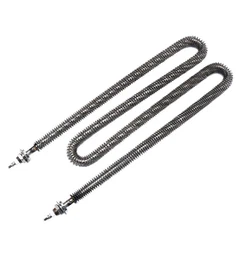
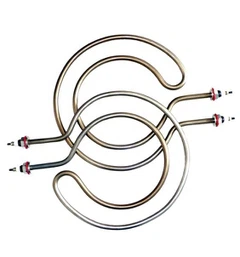
The main products contain immersion heating element, cartridge heating element, Finned heating element, Oven heating element, Ceramic heating element, Mica heating element, Washing Machine heating element. Band heating element, water heater thermostat. Heating Element Flange.
Rich Experience
ETDZ is established in the year 1986 ,own and operate several productive investment enterprises and also has established Ningbo Commercial Do Brasil Ltda., ETDZ HOLDINGS (Cambodia) Co., Ltd. and UNIFAME INDUSTRY LIMITED etc. Now it is a specialized developer and manufacturer of various kinds of heating element and thermostat.
Professional Technical Team
Our research and development department is constantly improving on current designs and techniques to take advantage of the latest in technology and apply these processes into your heating applications to make your heaters more durable and cost efficient. Our knowledge base and experienced sales executives can offer many suggestions and alternatives to your current heating projects so you can make a well informed decision with several alternative solutions.
What Is Tubular Heating Element?
Tubular heating elements are a common type of heating device, usually made of metal pipes, hence they are called tubular heaters. It is an important heat source device widely used in many industries and fields, such as metallurgy, chemical industry, power, medicine, food, etc. The primary purpose of tubular heating elements is to generate heat through electrical resistance. When an electric current passes across the heating element, it encounters resistance, leading to heat generation. This heat is then transferred to the surrounding medium or object, making them essential for applications requiring controlled and efficient heating processes.
-
![Straight Heating Element For Oven]() Straight Heating Element For OvenDescription Straight Electric Tubular Air Heater Heating Element for Oven is made of a metal tube as the shell, and spiral electric heating alloy wires are uniformly distributed along the axial direction of the tube. The gaps are filled...view more
Straight Heating Element For OvenDescription Straight Electric Tubular Air Heater Heating Element for Oven is made of a metal tube as the shell, and spiral electric heating alloy wires are uniformly distributed along the axial direction of the tube. The gaps are filled...view more -
![240V Finned Tubular Heating Element]() 240V Finned Tubular Heating ElementDescription The finned heating element are shown to be used in countless industrial processes. Their function is to create streams of air or gas at a controlled temperature environments or to maintain a controlled temperature. The...view more
240V Finned Tubular Heating ElementDescription The finned heating element are shown to be used in countless industrial processes. Their function is to create streams of air or gas at a controlled temperature environments or to maintain a controlled temperature. The...view more -
![Industrial Tubular Oil Heater Element]() Industrial Tubular Oil Heater ElementDescription Industrial tubular oil heater element is a kind of U shaped heating element. High temperature resistance wire evenly distributed in the high temperature resistant stainless steel seamless tube , the gap is filled with...view more
Industrial Tubular Oil Heater ElementDescription Industrial tubular oil heater element is a kind of U shaped heating element. High temperature resistance wire evenly distributed in the high temperature resistant stainless steel seamless tube , the gap is filled with...view more -
![U shape tubular heating element]() U shape tubular heating elementDescription The sheath materials of the Commercial Electric Coil Tubular Heater Rod can be incoloy800,copper,steel. There are various tubular heater shape , you can tell us directly the figure No.All size can be customized. Commercial...view more
U shape tubular heating elementDescription The sheath materials of the Commercial Electric Coil Tubular Heater Rod can be incoloy800,copper,steel. There are various tubular heater shape , you can tell us directly the figure No.All size can be customized. Commercial...view more -
![Flexible Tubular Heating Element]() Flexible Tubular Heating ElementDescription Flexible tubular heating element is the most versatile and widely used source of electric heat for industrial, commercial and scientific applications. They can be designed in a wide range of electrical ratings, diameters,...view more
Flexible Tubular Heating ElementDescription Flexible tubular heating element is the most versatile and widely used source of electric heat for industrial, commercial and scientific applications. They can be designed in a wide range of electrical ratings, diameters,...view more -
![Double U shape heater for granulator]() Double U shape heater for granulatorDescription Water tubular heating element is composed of a metal tube, a spiral resistance wire, and high-quality crystalline magnesium oxide powder with good thermal conductivity and good insulation. The heating pipes are made of...view more
Double U shape heater for granulatorDescription Water tubular heating element is composed of a metal tube, a spiral resistance wire, and high-quality crystalline magnesium oxide powder with good thermal conductivity and good insulation. The heating pipes are made of...view more -
![Stainless Steel Spiral Heater Element]() Stainless Steel Spiral Heater ElementDescription Stainless steel spiral heater element is made by a metal tube inserted into the electric heating wire, and in the gap part tightly filled with good thermal conductivity and insulation of crystalline magnesium oxide. The two...view more
Stainless Steel Spiral Heater ElementDescription Stainless steel spiral heater element is made by a metal tube inserted into the electric heating wire, and in the gap part tightly filled with good thermal conductivity and insulation of crystalline magnesium oxide. The two...view more -
![Anti Corrosion Teflon Coated Immersion Heater]() Anti Corrosion Teflon Coated Immersion HeaterDescription Anti corrosion teflon heating element is a new type of electric heater with strong corrosion resistance, used for heating all kinds of corrosive liquids. Excellent aging resistance and good winding performance, low surface...view more
Anti Corrosion Teflon Coated Immersion HeaterDescription Anti corrosion teflon heating element is a new type of electric heater with strong corrosion resistance, used for heating all kinds of corrosive liquids. Excellent aging resistance and good winding performance, low surface...view more -
![4 U fryer heating element]() 4 U fryer heating elementDescription Flat Tubular Heater and Fryer Heating Element is customized according to the non-standard samples of customers. Due to the advantages of the flat tube structure, the heat dissipation effect is better and the service life is...view more
4 U fryer heating elementDescription Flat Tubular Heater and Fryer Heating Element is customized according to the non-standard samples of customers. Due to the advantages of the flat tube structure, the heat dissipation effect is better and the service life is...view more -
![Double U Shape Heater for degumming machine]() Double U Shape Heater for degumming machineDescription 380V double U shaped heating element is a metal tube as the shell, along the center of the tube axial distribution of spiral electric thermal alloy wire (nickel chromium, iron chromium alloy) its gap filled with compact...view more
Double U Shape Heater for degumming machineDescription 380V double U shaped heating element is a metal tube as the shell, along the center of the tube axial distribution of spiral electric thermal alloy wire (nickel chromium, iron chromium alloy) its gap filled with compact...view more -
![Deep fryer heating element]() Deep fryer heating elementDescription Tubular Immersion water deep fryer heating element is cylindrical electrical heating elements with two head. Protected with a stainless steel sheath. Mostly double head heater is used for heating up solids such as injection...view more
Deep fryer heating elementDescription Tubular Immersion water deep fryer heating element is cylindrical electrical heating elements with two head. Protected with a stainless steel sheath. Mostly double head heater is used for heating up solids such as injection...view more -
![Stainless Steel Heater Element For Oven]() Stainless Steel Heater Element For OvenDescription Stainless steel electric grill tubular heating element supports non- standard customization.We need the relevant dimensions,voltage and power parameters below the following pictures.view more
Stainless Steel Heater Element For OvenDescription Stainless steel electric grill tubular heating element supports non- standard customization.We need the relevant dimensions,voltage and power parameters below the following pictures.view more


Straight tubular heating element for corrosive are widely used to heat liquids, air or metals as a reliable, economical, and versatile way, which can be used in a large variety of applications, including those with size restrictions for small spaces. They allow for even heat distribution as well as a high dielectric strength.
Precision
Tubular heating elements are known for their accuracy. They provide advanced temperature control, superior temperature management, and accurate heat transfers. The flexibility of tubular heat allows it to be used for almost any production. This is one of the benefits you can use to sway your decision if you buy tubular heat for sale. Tubular heating elements can perform better and last for longer with extreme accuracy.
Compact Size
Tubular heating is compact and portable, which has many advantages. The smaller, portable size makes installation easier. They are also easy to maintain, clean, or replace, provided you purchased the tubular heaters from a reputable source. Because these components are generally simple to remove and replace, manufacturing time barely increased.
High Working Temperature
The temperature exchangers have no liners and are fully welded. The absence of liners means no problem with high temperatures as in other configurations. It is also an excellent choice for heat transfer or welding, as it can withstand high temperatures
Low Maintenance
It is a fully welded construction, as almost no spare parts are required. Assembly of tubular heat is also easy. To make it easier to reach inner tubes and tube sheets, the components were made readily and easily accessible.
Types of Tubular Heating Element
Tubular Heater for Hot Runner Manifold
This type of tubular heater is designed specifically for hot runner systems in the plastic injection molding industry. They can heat the hot runner system evenly, ensuring the plastic maintains a constant temperature throughout the process. This helps optimize the production process, improving product quality and production efficiency.
Finned Tubular Heater
Finned tubular heaters have fins attached to the outer surface of regular tubular heaters, increasing the heat dissipation area and improving heat exchange efficiency. They are primarily used for heating air or gas, such as in heating systems, drying ovens, and other industrial or commercial applications.
Screw Plug Tubular Heater
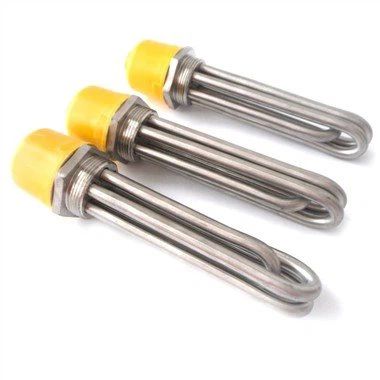
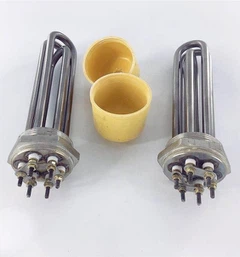
Screw-plug tubular heaters consist of one or more tubular heating elements and a screw plug, which can be installed directly into the container or system that requires heating. They are commonly used for heating oil, water, and chemicals and are suitable for industrial and commercial applications, such as heating oil tanks, water tanks, and reaction kettles.
Flanged Tubular Heater
Flanged tubular heaters fix tubular heating elements onto a metal flange, making installing the heater into containers or piping systems easy. These heaters are typically used for heating liquids, gases, and solids in large containers or industrial processes, such as oil, water, chemicals, steam, and air.
Teflon Coated Tubular Heater
Teflon-coated tubular heaters have a layer of Teflon (PTFE) material applied to the surface of the tubular heating element, providing good corrosion resistance and chemical resistance. These heaters are particularly suitable for heating solid acids, strong bases, and other corrosive liquids and are widely used in the chemical, food processing, and pharmaceutical industries.

Industrial Conduction Heating
Transfer of heat using tubulars is very important when designing a heating system. Heat transfer from the outer sheath of the tubular element must travel to the areas of interest in its application. The alloy of the sheath is important. This is because different alloys take on different properties for heat transfer. For example, steel is an excellent heat transfer material compared to stainless.
Industrial Convection Heating
With convection heating, the tubular element heats the air around. Then, natural convection currents transfer the heat to the intended medium. Tubular elements are able to dissipate heat extremely fast. This allows for the convection to heat the target product quickly. Convection allows for quicker heat penetration. Convection heaters don’t use fans or motors. As such, they are quiet and are low maintenance. They can be used by themselves to heat a small space or in series for a larger space. Convection heaters allow for the heating of specific or isolated areas, which makes them an energy efficient choice.
Industrial Radiation Heating
Industrial radiation heating generates heat and radiates it over a certain area. The distance and angle of the supporting bracket inform the design. Placing reflectors at specific angles efficiently directs the heat where it is needed. In industrial radiation heating, tubular elements are often preferred over quartz elements. This is due to their rigidity, and durability.
Components of Tubular Heating Element
Internal Resistance Wire
This wire is manufactured with a nichrome (80%Nickel/20% Chromium) coil, which is then positioned in the center of a metal tube sheath. Process conditions in terms of a watt/density (W/in2) dictate the wire design. We design with different pitches, tightness and a unique variable density along a single tubular for specific circulation designs/flow applications. This attention to the watt density will help ensure a long-lasting heating element.
Tube Sheath
The heating element sheath can be constructed of a variety of materials dependent on process conditions. Most applications utilize an alloy 800 or Stainless-Steel tube sheath material. We design the element sheath based on what the elements are being immersed or exposed to in the process and the temperature maximum of the process. Customer’s applications can get hot! So, we weld some heaters through the flange using standoff tubes, which can be the same alloy as the flange. These torrid situations require that the housing need be further away from the flange face to minimize heat and meet housing certification requirements.
Magnesium Oxide
Magnesium Oxide (MGO) is a fine granular powder material that insulates the Nichrome (NiCr) wire from the tube sheath. First, the MGO loosely fills the tubular sheath along with the internal resistance wire already positioned. Then we compact the MGO to form a solid layer that has both excellent thermal conductivity and dielectric strength. When a tubular element for a flange heater is formed the element is often bent into a ‘U’ Shaped. This bend has to be accounted for when filling the heater tube sheath; re-compaction and X-Ray conformity is a standard.
Material of Tubular Heating Element
Stainless Steel
This is the most common and versatile material for tubular heating elements, as it offers excellent heat transfer properties, high corrosion resistance, and long lifespan. Stainless steel tubular heating elements can be used for heating liquids, gases, solids, or surfaces, in various applications and industries, such as food processing, chemical processing, water heating, oil heating, and more.
Incoloy
This is a type of alloy that contains nickel, iron, and chromium, and offers superior heat transfer properties, high corrosion resistance, and long lifespan. Tubular heating elements can be used for heating liquids, gases, solids, or surfaces, in various applications and industries, such as petrochemical, aerospace, nuclear, and more.
Inconel
This is a type of alloy that contains nickel, chromium, and iron, and offers superior heat transfer properties, high corrosion resistance, and long lifespan. Inconel tubular heating elements can be used for heating liquids, gases, solids, or surfaces, in various applications and industries, such as marine, automotive, power generation, and more.
Copper-Nickel Alloy
This is a type of alloy that contains copper and nickel, and offers good heat transfer properties, high corrosion resistance, and long lifespan. Copper-nickel alloy tubular heating elements can be used for heating liquids, gases, solids, or surfaces, in various applications and industries, such as refrigeration, air conditioning, and more.
Diameter
The diameter of the tubular heating element affects the heat transfer rate, the heat dissipation rate, and the bending radius. A larger diameter means a higher heat transfer rate, a lower heat dissipation rate, and a larger bending radius. A smaller diameter means a lower heat transfer rate, a higher heat dissipation rate, and a smaller bending radius. The diameter of the tubular heating element should be chosen according to the application and the installation method, as well as the power, voltage, and temperature requirements.
Length
The length of the tubular heating element affects the heating capacity, the heat distribution, and the installation method. A longer length means a higher heating capacity, a more uniform heat distribution, and a more flexible installation method. A shorter length means a lower heating capacity, a less uniform heat distribution, and a less flexible installation method. The length of the tubular heating element should be chosen according to the application and the installation method, as well as the power, voltage, and temperature requirements.
Shape
The shape of the tubular heating element affects the heating capacity, the heat distribution, and the installation method. A straight shape means a higher heating capacity, a less uniform heat distribution, and a simpler installation method. A bent or formed shape means a lower heating capacity, a more uniform heat distribution, and a more complex installation method. The shape of the tubular heating element should be chosen according to the application and the installation method, as well as the power, voltage, and temperature requirements.
How Do Tubular Heating Elements Make a Difference in Real Industries?
Transforming the Plastics Industry
In the fast-paced world of plastic manufacturing, precision is critical. Tubular heating elements have been pivotal in enabling manufacturers to achieve the precise temperature control necessary for high-quality injection molding and extrusion. The result? A significant improvement in product consistency and a reduction in material waste drives economic and environmental benefits.
Elevating Food Safety and Quality
The food processing industry faces stringent regulations and high consumer expectations. Tubular heating elements have been critical in ensuring uniform cooking and processing. This meets safety standards and enhances the taste and texture of food products, contributing to consumer satisfaction and brand loyalty.
Reinventing Packaging Integrity
In the world of packaging, the strength and durability of seals are paramount. Precision heating solutions have enabled packaging companies to achieve consistent, high-quality seals, ensuring product integrity from the factory floor to the consumer’s hands. This reliability is crucial in building consumer trust and reducing the risk of product recalls.
Advancing Chemical Processing
Chemical reactions require precise temperature control to ensure product purity and safety. Tubular heating elements have allowed chemical manufacturers to maintain controlled environments, leading to more consistent reactions and higher-quality end products. This precision not only enhances safety but also optimizes production efficiency.
Factors to Consider Before Buying Tubular Heating Elements


Material and Sheath Selection
The sheath material plays a pivotal role in the heater’s performance and durability. Stainless steel is a popular choice due to its corrosion resistance and sturdiness. In environments with corrosive elements, such as chemicals or moisture, opt for a sheath material that can withstand these conditions, ensuring an extended lifespan for the heater.
Watt Density Matters
Watt density, the power output per unit of heated surface area, is a critical factor. Choosing the wrong watt density can lead to premature heater failure. High watt density heaters are suitable for quick heat-up applications, while low watt density heaters are ideal for maintaining a steady temperature over a more extended period. Striking the right balance ensures efficient heating without compromising the heater’s longevity.
Voltage and Power Requirements
Understanding the power supply available is crucial. tubular heating elements come in various voltages, so ensure the chosen heater aligns with the electrical specifications of your facility. Additionally, consider the power requirements for your application to prevent overloading or underutilizing the heater.
Temperature Control and Regulation
For applications requiring precise temperature control, opt for a tubular heating element with built-in regulation features. Thermostats, temperature controllers, and thermocouples can help maintain a consistent temperature, preventing overheating or inadequate heating.
Installation and Mounting Options
Consider the physical space where the tubular heating element will be installed. These heaters come in different shapes and sizes, including straight, formed, and finned designs. Choose a configuration that seamlessly fits into your system. Additionally, ensure the heater can be installed in the required position by considering specific mounting orientations.
Environmental Considerations
Evaluate the operating environment for factors such as humidity, dust, and chemical exposure. These elements can impact the heater’s performance. Select a heater with suitable protection features, such as moisture-resistant seals or explosion-proof enclosures, to ensure reliable operation in challenging conditions.
Cost and Energy Efficiency
While cost is a significant consideration, it should be balanced with energy efficiency. Investing in a high-quality, energy-efficient tubular heating element may have a higher upfront cost but can result in long-term savings through reduced energy consumption and maintenance.
Tubular heating element types are commonly used for heating chemical and corrosive liquids, as well as for heating molds and various metals in industrial furnaces.
These types of heaters can be manufactured in diameters of 6.5 mm, 8.5 mm, 11.5 mm, 14.5 mm, and 16.00 mm, and can be easily produced in any size from 5 mm to 20 mm.
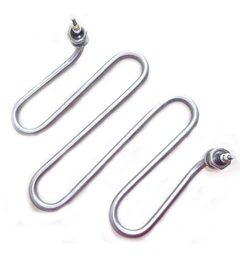
Tubular heating elements have a wide range of applications in industrial, commercial, and scientific fields. They consist of parts such as metal casing and connection ends, and can easily take shape, allowing welding or soldering to any metal surface. Therefore, integrating them into systems is quite easy. tubular heating elements can be produced as desired, with sleeves, sheaths, flanges, coils, and aluminum coatings, in straight or curved shapes. For example, straight rods, U-shaped, and M-shaped are the most commonly used shapes.
Tubular heating elements developed for industrial use are preferred in many different fields for heating water, oil, chemicals, and corrosive liquids. Industrial tubular heating elements are also used for heating molds and various metal materials in furnaces found in industrial environments.
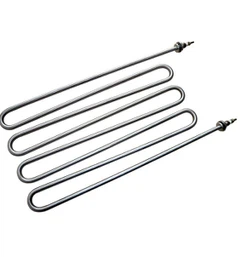
In addition to round tubular heating element types, flat-shaped heaters of varying sizes can also be produced. Common applications of these heaters include railway switch heating, oil heaters in industrial fryers, and dry air heaters in some special ovens.
Tubular heating element models are widely used in various fields such as the plastic industry, packaging industry, woodworking industry, construction industry equipment, household appliances, foundry industry, high vacuum applications, and laboratory equipment.
Manufacturing Process of Tubular Heating Elements
Selection of Materials and Specifications
The first crucial step in the manufacturing process of tubular heating elements is selecting the appropriate materials and determining the specifications based on the intended application. The metal sheath, heating element, and insulation materials are chosen based on the required temperature range, environmental conditions, and corrosive or abrasive characteristics of the heated medium.
Tube Forming and Bending
Once the materials and specifications are finalized, the manufacturing process begins with tube forming and bending. This step involves shaping the metal sheath into the desired configuration. Depending on the shape of the heating element required (straight, U-shaped, or custom-formed), the metal sheath undergoes precision bending and forming techniques.
Insertion of Heating Element (Coil) into the Tube
After forming the metal sheath, the next step is to insert the resistive heating element (coil) into the tube. The resistive wire is coiled and carefully inserted into the sheath for open coil tubular heating elements, ensuring uniform distribution along the tube’s length. In the case of cartridge heaters, the heating element is compactly placed within the cartridge’s cylindrical body.
Sealing and Insulation
Once the heating element is in place, the space between the heating coil and the metal sheath is filled with insulation material, typically magnesium oxide (MgO). This step is crucial as it provides electrical insulation and facilitates efficient heat transfer to the outer sheath. The insulation material is tightly packed to ensure good thermal conductivity, and the ends of the tubular heating element are sealed to prevent any moisture or contaminants from entering the interior.
Attachment of Fittings and Terminals
Various fittings and terminals are attached to the tubular heating element in this stage to facilitate electrical connections and installation. The choice of fittings and terminals depends on the application and electrical requirements. For immersion heaters, flanges or threaded fittings are commonly used to secure the heating element in the system. Terminal pins or lead wires are connected to the heating element, allowing for easy electrical connection to the power supply.
Quality Control and Testing
The ultimate step in the manufacturing process involves rigorous quality control and testing procedures. Each tubular heating element undergoes thorough inspections to meet the required standards and perform as expected. Non-destructive testing methods, such as electrical continuity, insulation resistance, and leakage current tests, are conducted to identify defects or irregularities. Additionally, the heating element’s wattage, resistance, and other electrical characteristics are verified to meet the desired specifications.
Our Certifications
The trademark of “NBETDZ” has also been selected for “Ningbo export famous brand” and “Zhejiang export famous brand”, and appraised as the AEO advanced certification enterprise of the customs. The company was awarded the title of “Example Enterprise for Trade & Logistic”. Be granted quality ISO 9001, environmental ISO14001 and occupational health ISO45001 those three management system certificates.

Our Factory
ETDZ is established in the year 1986 ,own and operate several productive investment enterprises and also has established Ningbo Commercial Do Brasil Ltda., ETDZ HOLDINGS (Cambodia) Co., Ltd. and UNIFAME INDUSTRY LIMITED etc.With uncompromised dedication to our customers, we offer solutions and not just products.Now it is a specialized developer and manufacturer of various kinds of heating element and thermostat.

Ultimate FAQ Guide to Tubular Heating Element
Q: What are the typical applications of tubular heating elements?
Q: How do I determine the wattage and size of tubular heating elements needed for my application?
Q: What is the expected lifespan of tubular heating elements?
Q: Are tubular heating elements energy-efficient?
Q: Can tubular heating elements be used in hazardous environments?
Q: How important is temperature control for tubular heating elements?
Q: Can tubular heating elements be customized for specific applications?
Q: Are tubular heating elements easy to install and maintain?
Q: What safety features should I look for in tubular heating elements?
Q: How can I find a reputable tubular heating element manufacturer/supplier?
Q: Is it safe to use a tubular heating element?
Q: Is it expensive to run a tubular heating element?
Q: How can I avoid accidental burns from the tubular heating element?
Q: What are the benefits of a tubular heating element?
Q: Will a tubular heating element heat a room?
Q: Can you leave a tubular heating element on all the time?
Q: Where is the best place to put a tubular heating element?
Q: Do tubular heating elements use much electricity?
Q: What is the maximum temperature for a tubular heating element?
Q: What is the difference between cartridge heater and tubular heating element?
As one of the most professional tubular heating element manufacturers and suppliers in China for 35 years, we're featured by quality products and good service. Please rest assured to wholesale customized tubular heating element made in China here from our factory. Contact us for free sample.
3kw 220v Tubular Heating Element Drying Oven, Finned Tubular Heating Element, Closed Tubular Heating Elements