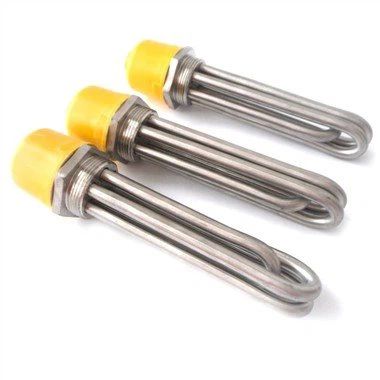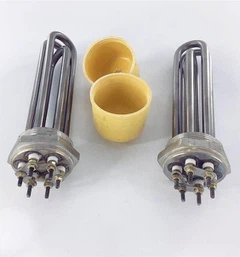
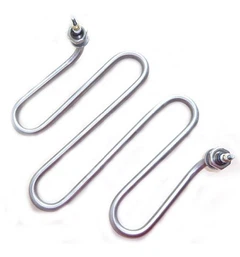
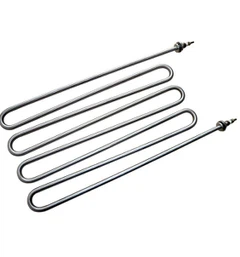


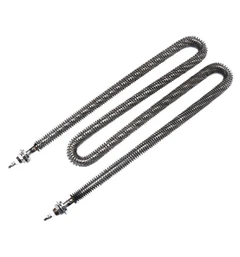
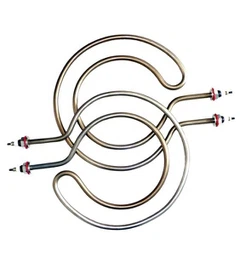


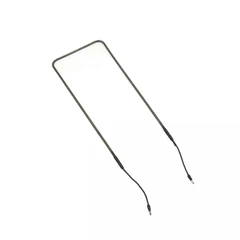

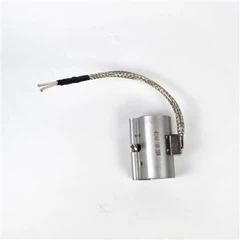

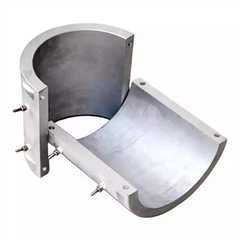





The design and the features of immersion heaters can vary greatly, making them valuable in different segments of the industry. Immersion heaters operate mostly under conduction and convection modes when immersed into fluids. Depending on the physical and chemical properties of the fluids, the shapes, materials of construction, and the positioning of the immersion heaters are optimized to deliver the desired heating output. Various shapes of immersion heaters are possible, but it is wise to always calculate the ideal design per case.
The key to successful heating continuously flowing liquid is the accurate dissipation of heat at an acceptable rate required both under steady and dynamic state conditions. For example, while in a steady static state the accurate calculation of heating needs might be suitable, however in a dynamic mode the situation greatly changes leaving a required thermal response time more crucial from the immersed heaters. Dynamic cases might require specific geometric shapes with higher surface areas and more external surface areas are required. Examples of this are coiled tubular elements. When using coiled tubular heating elements, more heat is transferred to the fluid reducing heat-up time while maintaining a lower watt density.
Coil Tubular Element Designs
Figure 1 displays two designs for a coiled shaped tubular element. In the first case, image (a), a wider tubular element with a 0.475-inch diameter is shown, compared to image (b) showing a similar coil with a 0.260-inch diameter.
Image B can be more appropriate for applications requiring faster heat-up. This is because the liquid preheated by the coil is exposed to more surface area in a coil. Thus, allowing for more efficient heat transfer.
There are possible pitfalls of such design changes. More spirals can produce different effects on the fluid flows, such as more friction that can restrict liquid flow depending on viscosity.

Figure 1: (a) a wider tubular element (0.475 inch dia), (b) a smaller tubular element (0.260) (image is for illustration purposes only and does not illustrate the resistance coil or MgO).
A distinct application of tubular elements is the depolymerization of commercial plastic wastes. The de-polymerization or reversing of polymerization is a thermal or a catalytic process that requires thermal activity to promote a chemical reaction. Using an almost immediate heat source, immersion heaters have a quick response time and are ideal solutions for this industrial process.