

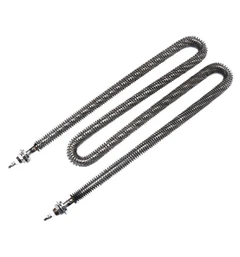
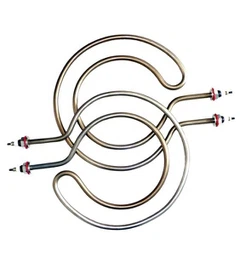



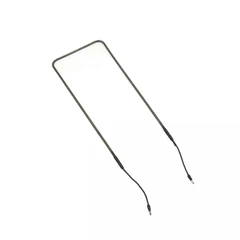








The hot resistance and cold resistance of the heating element refer to the resistance value under different working conditions. There are certain differences between them, mainly depending on the temperature change and resistance characteristics.
Hot resistance refers to the resistance value of the heater element in the working state.When the current passes through the heating tube, due to the presence of resistance, the electrical energy is converted into heat energy, resulting in an increase in the temperature. In the hot state, the resistance value will increase with the temperature increasing. This is because the resistivity of the material usually increases with the temperature, that is, the hot resistance value is greater than the cold resistance value.
Cold resistance refers to the resistance value of the heating element in the initial state, it means the resistance value is in the state when the heater is not heated or the temperature is low. When it is in a cold state, its temperature is low and the resistance value is relatively small. Cold resistance is usually the resistance value measured at room temperature, so it is also called room temperature resistance.
The key to distinguish between hot resistance and cold resistance is the working state and temperature. When the heating element reaches a stable state after heating, its resistance value is called a hot resistance, and conversely, twhen it is not heated or the temperature is low is called a cold resistance.
It should be noted that the hot resistance and cold resistance are the resistance values of the electric heater element under the specific working state, rather than the inherent resistance of material itself. They reflect the resistance changes of heating tubes at different temperatures, and are of great significance for the design and control of heating systems.