











The heating element alone does not comprise the entire heating system. Aside from the heating element, a heater consists of the terminations, leads, insulation, packing, sheath, and seals. These heaters have various forms and configurations to suit a particular application. Enumerated below are the most common heaters and their applications.
· Air Process Heaters: As the name suggests, this type of heater is used to heat up flowing air. Air process heaters are basically a heated tube or pipe wherein one end is for introducing cold air while the other end is the hot air exit. Along the walls of the pipe are coils of heating elements insulated by ceramics and non-conducting gaskets. These are typically used in high-flow, low-pressure applications. Applications for air process heaters are heat shrinking, laminating, adhesive activation or curing, drying, baking, etc.

Cartridge Heaters: In this type of heater, the resistance wire is coiled around a ceramic core, typically made of compacted magnesium oxide. Rectangular configurations are also available where the resistance wire coils pass three to five times along the length of the cartridge. The resistance wire or the heating element is situated near the walls of the sheathing material for maximum heat transfer. To protect the internals, the sheath is usually made of corrosion resistant materials like stainless steel. The leads are usually flexible with both of their terminations located on one end of the cartridge. Cartridge heaters are used in die or mold heating, fluid heating (immersion heaters), and surface heating.

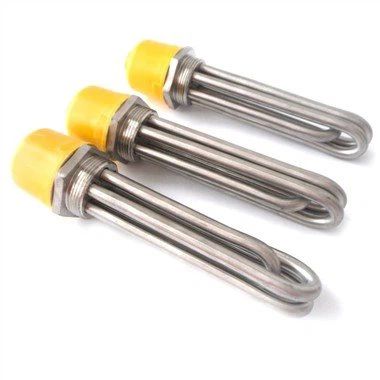
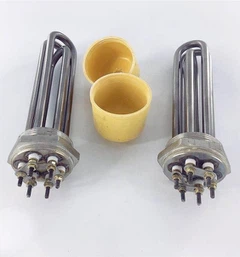
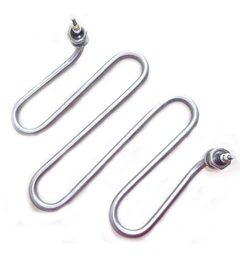
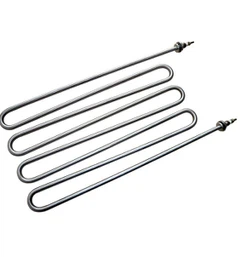
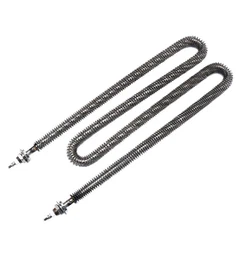
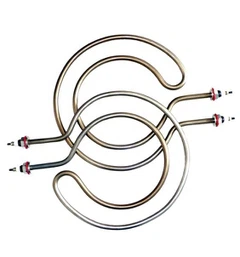
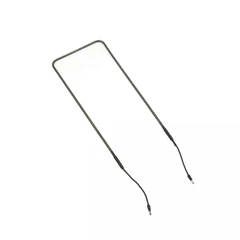
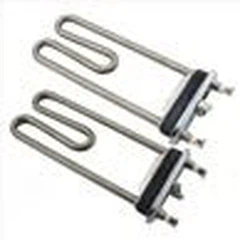
Tubular Heaters: Tubular heaters’ internals is the same as that of cartridge heaters. Its main difference from cartridge heaters is that the lead terminals are on the opposite ends of the tube. The whole tubular construction can be bent into different forms to suit the heat distribution required by the space or surface to be heated. Also, these heaters can feature fins that are mechanically bonded onto the sheath surface to aid in an effective heat transfer. Tubular heaters are as versatile as cartridge heaters and are used in similar applications.

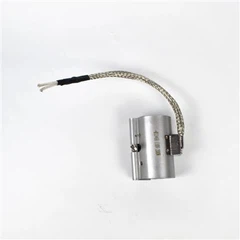
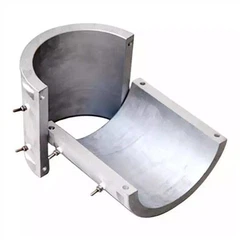
Band Heaters: These heaters are designed to wrap around cylindrical metal surfaces or containers such as pipes, barrels, drums, extruders, and so forth. They feature bolted locking tabs to securely clamp onto the surface of the container. Inside the band, the heater is a thin resistance wire or ribbon typically insulated by a mica layer. The sheathing is made of stainless steel or brass. Another advantage of using band heaters is that it indirectly heats the fluid inside the vessel. This means the heater is not subjected to any chemical attack from the process fluid. Possible ignition is also prevented when used for oil and lubricant service.

Strip Heaters: This type of heater is flat and rectangular in form and is bolted on to the surface to be heated. Its internals are similar to a band heater. However, the insulating material, aside from mica, can be ceramics such as magnesium oxide and fiberglass. The typical use of strip heaters is surface heating of dies, molds, platens, tanks, ducts, etc. Aside from surface heating, they can also be used for air or fluid heating by having finned surfaces. Finned strip heaters are seen in ovens and space heaters.