












Alright, folks! As a supplier of electric heating elements, I've been getting a bunch of questions lately about the temperature requirements for these elements in 3D printers. So, I thought I'd sit down and write this blog to clear things up.
First off, let's talk about why temperature is such a big deal in 3D printing. You see, 3D printers work by melting a filament and then depositing it layer by layer to create an object. The temperature at which the filament melts and flows properly is crucial. If it's too low, the filament won't melt completely, leading to poor adhesion between layers and a weak, shoddy print. On the other hand, if it's too high, the filament can become too runny, causing stringing, blobs, and other printing defects.
Now, different types of filaments have different melting points, which means they require different temperatures from the electric heating element in the 3D printer. Let's take a look at some of the most common filaments and their temperature requirements.
PLA (Polylactic Acid)
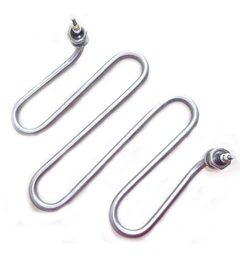
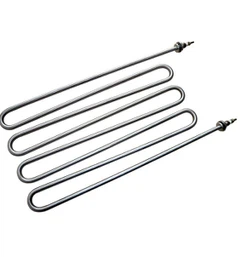
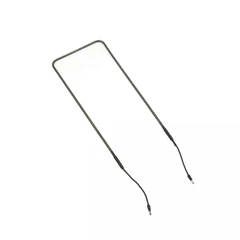
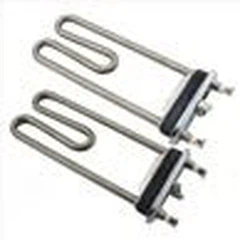
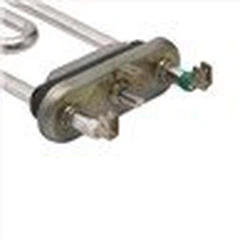
PLA is one of the most popular filaments for 3D printing, especially for beginners. It's easy to print with, has a low melting point, and is biodegradable. The recommended temperature range for printing PLA is usually between 180°C and 220°C. This relatively low temperature makes it less demanding on the electric heating element. Our U shaped tubular heater element is a great choice for 3D printers using PLA. It can heat up quickly and maintain a stable temperature within this range.
The reason PLA can work well in this temperature range is that it's a semi - crystalline polymer. At around 180°C, the polymer chains start to gain enough energy to move past each other, allowing the filament to flow and be deposited. If you go much higher than 220°C, the PLA can start to degrade, releasing unpleasant fumes and losing its structural integrity.
ABS (Acrylonitrile Butadiene Styrene)
ABS is another widely used filament, known for its strength and durability. However, it has a higher melting point compared to PLA. The ideal printing temperature for ABS is typically between 220°C and 250°C. This higher temperature requirement means that the electric heating element needs to be more powerful and efficient.
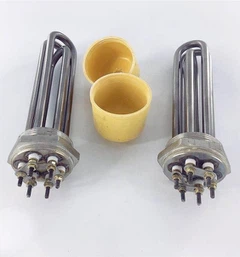
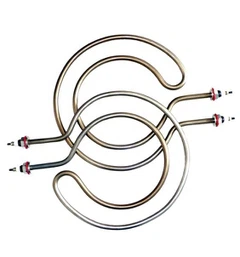
Our Double U shape heater element for degumming machine can handle the heat needed for ABS printing. It can reach and maintain the required high temperatures consistently. ABS is an amorphous polymer, and it requires more energy to break the intermolecular forces holding the chains together. That's why a higher temperature is necessary for it to flow smoothly through the printer nozzle.
PETG (Polyethylene Terephthalate Glycol)
PETG is a filament that combines the best of both worlds - it has the ease of printing of PLA and the strength of ABS. The recommended printing temperature for PETG is in the range of 220°C - 240°C. This is similar to ABS, but PETG often behaves better at the lower end of this range.
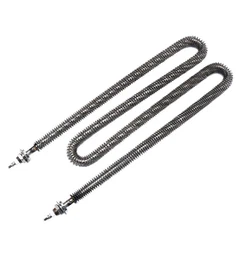
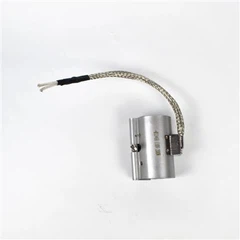
The electric heating element needs to be able to heat up the nozzle to this temperature range and also be able to adjust the temperature according to the printing speed and layer thickness. Our Thermostatic Electric Heating Element is perfect for this. It can sense the temperature and make automatic adjustments to ensure a stable printing environment.
Other Factors Affecting Temperature Requirements
It's not just the type of filament that affects the temperature requirements. The design of the 3D printer itself also plays a role. For example, if the printer has poor insulation, more heat will be lost during the printing process. This means the heating element needs to work harder to maintain the desired temperature.
The size of the 3D printed object can also matter. Larger objects may require a more consistent temperature over a longer period of time. The heating element needs to be able to handle this extended use without overheating or losing its efficiency.
The printing speed is another factor. If you're printing at a high speed, the filament needs to melt and be deposited quickly. This may require a slightly higher temperature to ensure that the filament flows smoothly.
Our Heating Elements for 3D Printers
We've spent a lot of time and effort developing our electric heating elements to meet the diverse temperature requirements of 3D printers. Our U - shaped tubular heater elements are designed with a high - quality alloy that can withstand the repeated heating and cooling cycles in 3D printing. They're also coated to prevent corrosion, which extends their lifespan.


The double U - shape heater elements for degumming machines can provide a large amount of heat quickly. They're made with a special winding technique that ensures an even distribution of heat, which is crucial for getting a uniform print.
Our thermostatic electric heating elements are equipped with advanced sensors and control systems. They can adjust the temperature in real - time based on the feedback from the printer, ensuring that the printing process is as smooth as possible.
Contact Us for Your 3D Printing Heating Needs
If you're in the market for electric heating elements for your 3D printer, we'd love to hear from you. Whether you're a hobbyist just starting out or a professional 3D printing service provider, we have the right heating element for you. We can offer customized solutions based on your specific temperature requirements, printer design, and budget.
Don't hesitate to reach out to us to discuss your needs and get a quote. We're confident that our products will help you achieve better 3D printing results.
References
- "3D Printing Materials: A Comprehensive Guide" - Published by 3D Printing Industry
- "The Science of Filament Melting in 3D Printing" - Journal of Additive Manufacturing Technologies


