












Hey there! As a supplier of band heating elements, I often get asked about how to control the temperature of these nifty devices. Band heating elements are super useful in a bunch of industries, from plastics processing to food production. They're great at heating up cylindrical objects, but getting that temperature just right can be a bit tricky. So, let's dive into some practical ways to control the temperature of a band heating element.
Understanding the Basics
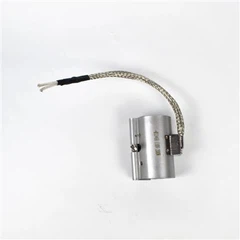
First things first, it's important to know what a band heating element is and how it works. A band heating element is basically a flexible heater that wraps around a cylindrical surface. It uses electrical energy to generate heat, which is then transferred to the object it's wrapped around. There are different types of band heating elements, like the Mica Band Heating Element for Injection Mold. Mica-based heating elements are popular because they're efficient, can withstand high temperatures, and offer good thermal insulation.
The key to controlling the temperature is to understand the relationship between power input, heat transfer, and the specific requirements of your application. Too much heat can damage your product or the equipment, while too little heat might not get the job done.
Using a Thermostat
One of the simplest and most common ways to control the temperature of a band heating element is by using a thermostat. A thermostat is a device that senses the temperature and turns the heating element on or off to maintain a set temperature.
When choosing a thermostat for your band heating element, there are a few things to consider. First, make sure it's compatible with the voltage and wattage of your heating element. You don't want to overload the thermostat or have it not work properly. Second, choose a thermostat with the right temperature range for your application. Some thermostats can handle high temperatures, while others are better suited for lower ranges.
Let's say you're using an Industrial Mica Band Heater with Plug in a plastic extrusion process. You'd need a thermostat that can accurately control the temperature within the range required for that specific type of plastic. Set the thermostat to the desired temperature, and it will automatically turn the heating element on when the temperature drops below the set point and turn it off when it reaches the set point.
Proportional, Integral, Derivative (PID) Controllers
For more precise temperature control, especially in applications where temperature stability is crucial, you might want to consider using a PID controller. A PID controller is a more advanced type of temperature control device that uses a mathematical algorithm to adjust the power output of the heating element based on the difference between the set temperature and the actual temperature.
The "Proportional" part of the PID controller adjusts the power output in proportion to the difference between the set point and the actual temperature. The "Integral" part takes into account the accumulated error over time, which helps to eliminate any steady-state error. The "Derivative" part predicts the future temperature trend based on the rate of change of the temperature, allowing the controller to make more proactive adjustments.
Using a PID controller with your Mica Band Heater For Industry can provide a much more stable and accurate temperature control compared to a simple thermostat. It can be a bit more expensive and complex to set up, but it's really worth it if you need tight temperature control for your application.
Heat Sinks and Insulation
Another way to control the temperature of a band heating element is by using heat sinks and insulation. Heat sinks are materials that absorb and dissipate heat, helping to keep the temperature of the heating element and the surrounding area in check. Insulation, on the other hand, reduces the amount of heat that is lost to the environment, which can help to maintain a more consistent temperature.
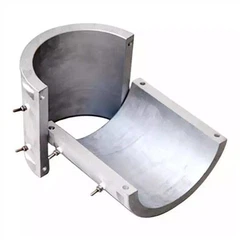
For example, you can use a metal heat sink that is in contact with the band heating element. The heat sink will absorb some of the heat and radiate it away, preventing the heating element from overheating. Insulation can be added around the outside of the heating element and the object it's heating to reduce heat loss. This not only helps with temperature control but also improves energy efficiency.
Regular Maintenance and Monitoring
Regular maintenance and monitoring are essential for proper temperature control of band heating elements. Over time, heating elements can wear out, which can affect their performance and temperature control. Make sure to check the heating element regularly for any signs of damage, such as cracks or breaks in the insulation.


You can also use temperature sensors to monitor the temperature of the heating element and the object it's heating. This will allow you to detect any temperature fluctuations or issues early on and take corrective action. For example, if you notice that the temperature is consistently higher or lower than the set point, you can adjust the thermostat or check the heating element for problems.
Conclusion
Controlling the temperature of a band heating element is all about understanding the basics, using the right control devices, and taking proper care of the equipment. Whether you're using a simple thermostat or a more advanced PID controller, there are plenty of ways to ensure that your band heating element operates at the right temperature for your application.
If you're in the market for high-quality band heating elements or need more advice on temperature control, don't hesitate to reach out. We're here to help you find the best solutions for your specific needs. Whether it's the Mica Band Heating Element for Injection Mold, Industrial Mica Band Heater with Plug, or Mica Band Heater For Industry, we've got you covered.
References
- Incropera, F. P., & DeWitt, D. P. (2002). Fundamentals of Heat and Mass Transfer. John Wiley & Sons.
- Nellis, G. F., & Klein, S. A. (2017). Heat Transfer. Cambridge University Press.


