



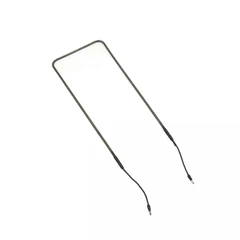

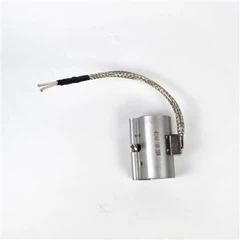

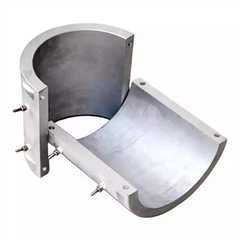





The development process of the instant water dispenser equipped with the thick film heater is a very typical case of technological-driven product upgrade. The thick film heating technology has completely solved the core problems in the early development of the instant water dispenser, which is the key factor enabling it to become a mainstream product in the market.
The early water storage stage (before the year 2000)
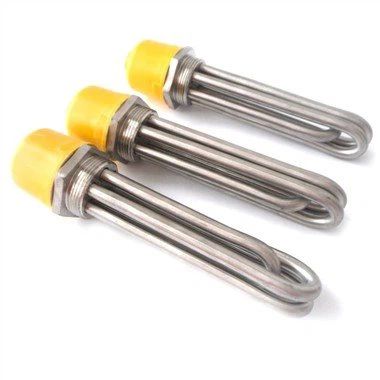
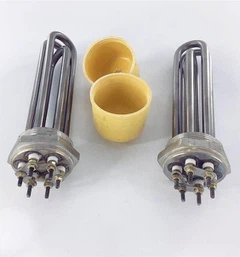
Technical features: Built-in 2-5 L metal or plastic inner tank. Use an immersion electric heating element or heating plate to heat the entire tank of water to 90-95 ℃, and then maintain the temperature for a long time.
Main pain points: Repeated heating results in "boiled water", high power consumption, requiring 3-5 minutes for the entire water tank to heat up, and large size.
Quartz tube heating stage (In the year 2000-2010)
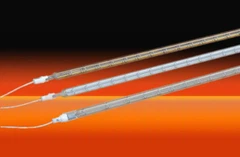
Technical features: The water storage tank is eliminated. Water flows through the gaps of the spiral electric heating wire in the quartz glass tube. Hot water is produced within 3 to 6 seconds after power is applied.
Advantages: It is the first to achieve "instant heating upon opening", reducing the risk of repeatedly boiled water.
Disadvantages: Quartz tubes are prone to cracking, have a large thermal inertia, poor temperature control accuracy (±5-8 ℃), and high power startup causes significant impact on the power grid.
Thick-film rapid heating stage (2010 - 2020)
Thick-film heating technology is not a new invention. It originated from the needs of electronic packaging and interconnection. It was initially applied to military and aerospace equipment, and later expanded to industrial portable wireless products. Making it smaller, more cost-effective, and applying it to consumer-grade water dispensers represents an important technological migration and innovation.

Technical principle breakthrough:
Structure: The resist paste (thick film) is precisely adhered to the surface of the insulating substrate (such as ceramics, stainless steel) through processes such as printing and sintering, forming a micro-circuit.
Working method: After being powered on, the current passes through the thick film resistor, causing the entire substrate to heat up instantly. When water flows through its internal channels, it is efficiently heated. This is a "surface heating" method, rather than the traditional "point heating" or "line heating".
Performance improvement:
– Achieved true "instant heating within 1-3 seconds", without any waiting time.
– The thermal efficiency has increased from 85% to around 97%.
– The time for hot water to flow out has been reduced to 1-3 seconds;
- The volume has been reduced by 30%, allowing it to be embedded in the countertop or mounted on the wall as a pipeline unit.
– The complete separation of water and electricity has been achieved, making the dry-burn prevention mechanism easier to implement.
Market share:
By 2025, the thick-film solution will account for 60% of the shipments of heating modules for instant water dispensers.