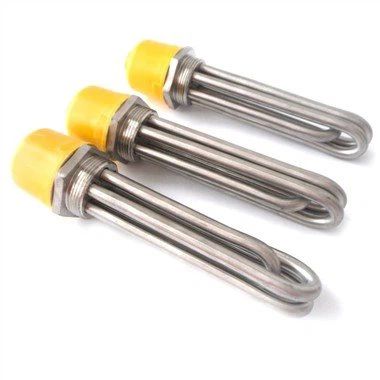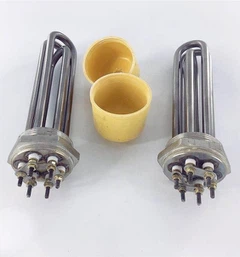
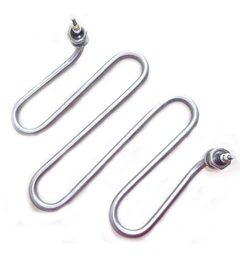
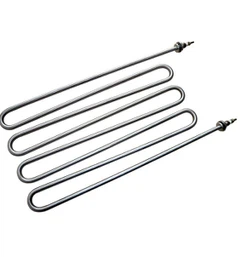




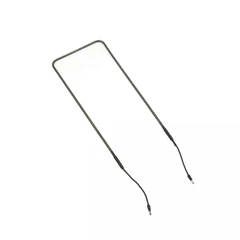

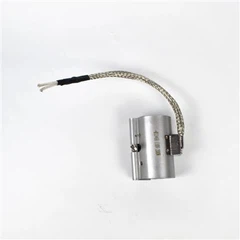

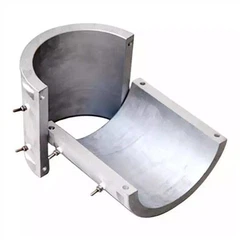



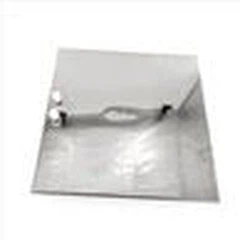
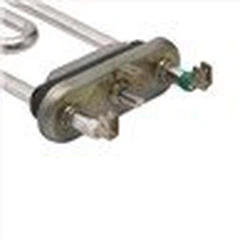

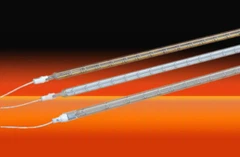



A heating element is a material or device that directly converts electrical energy into heat or thermal energy through a principle known as Joule heating. Joule heating is the phenomenon where a conductor generates heat due to the flow of electric current. As the electric current flows through the material, electrons or other charge carriers collide with the ions or atoms of the conductor creating friction at an atomic scale. This friction then manifests as heat. Joule’s first law (Joule-Lenz law) is used to describe the amount of heat produced from the flow of electricity in a conductor. This is expressed as,
P = IV or P =I²R
From these equations, the amount of heat generated depends upon the current and the voltage or the conductor resistance. In the design of heating elements, the resistance is the more important factor.
Joule heating is evident in all conducting materials in varying intensities, except for a special type of material known as superconductors. Generally, for electrically conductive materials, less heat is generated since the charge carriers can easily flow through; while for materials with high electric resistance, more heat is generated. Superconductors, on the other hand, allow the flow of electricity but do not produce any heat. Usually, heat from conductors is classified as energy loss. Electrical energy used to drive powered equipment generates unnecessary heating in the form of copper loss which ultimately does not produce any useful work.
Electrical heating elements, in a sense, are almost 100% efficient since all supplied energy is converted into its intended form. Heating elements may not only conduct heat but also transfer energy through light and radiation as well. However, this is only true for ideal resistors. Small losses can be derived from the inherent capacitance and inductance of the material which converts the electrical energy into electric and magnetic fields, respectively. Considering the whole heater system, losses are from the dissipation of heat into the external environment from the process fluid or from the heater itself. Thus, the system must be isolated to utilize all the heat generated.