

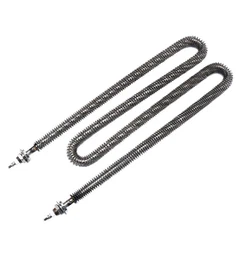
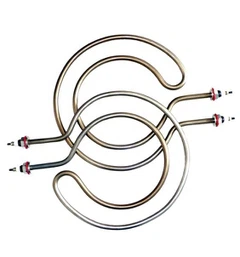


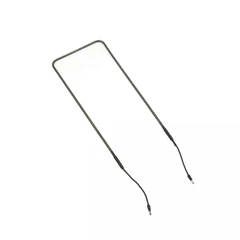

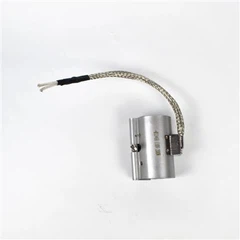

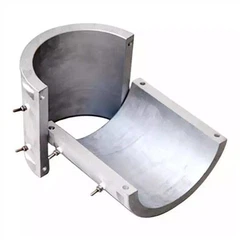





Nickel-Chromium (Ni-Cr) Alloy: One of the most commonly used materials for heating elements. Nickel-chromium alloys are highly regarded for their ductility, high resistivity, and excellent oxidation resistance even at high temperatures. It is typically composed of 80% nickel and 20% chromium.
Iron-chromium-aluminum alloy: Usually known under the Kanthal trademark, ferritic iron-chromium-aluminum alloys are typically composed of the following components: 20% to 24% chromium, 4% to 6% aluminum, and the remaining parts are filled with iron. Compared to nickel-chromium alloys, these alloys are favored due to their flexibility and lower density.
Molybdenum disilicide: A refractory metal ceramic (ceramic-metal composite material), molybdenum disilicide is mainly used as a heating element material. Due to its high melting point and excellent corrosion resistance, it is highly suitable for high-temperature furnaces. Molybdenum disilicide heating elements are manufactured through various energy-intensive methods, including mechanical alloying, combustion synthesis, impact synthesis, and hot isostatic pressing. Their temperature can reach 1,900°C. However, they have disadvantages such as low toughness at ambient temperature and susceptibility to high-temperature creep. At room temperature, molybdenum disilicide is very brittle and requires careful handling.
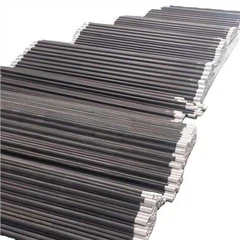
Silicon Carbide heating elements ,they are made of ceramics, which are formed by recrystallization or reaction at temperatures above 2,100°C to combine SiC grains. These elements are usually porous (8-25%) and allow the atmosphere inside the furnace to interact with the material. Over time, the heating elements may gradually oxidize, which will increase their resistance during a process called "aging." To maintain a stable power output, variable voltage power supplies are typically used to gradually increase the voltage as the elements age. This aging process eventually limits the lifespan and performance of the heating elements.
Graphite, a mineral composed of carbon with a hexagonal atomic structure,which is an excellent conductor of heat and electricity. It can generate heat at temperatures exceeding 2,000°C. At high temperatures, its resistance significantly increases. It can also withstand thermal shock well and maintain elasticity without becoming brittle during rapid heating and cooling cycles.
When used as heating elements, refractory metals such as tungsten and molybdenum exhibit properties similar to graphite. Tungsten can operate at the highest temperatures but is also the most expensive. Molybdenum, on the other hand, is less costly and more commonly used, and is even more expensive than graphite. Like graphite, these metals must be used under vacuum conditions because they have a strong affinity for oxygen.
Positive temperature coefficient materials: Typical PTC materials include rubber and ceramics. PTC rubber is usually made from polydimethylsiloxane (PDMS) and carbon nanoparticles are added. The characteristic of PTC heaters is that they can regulate the current by increasing the resistance as the temperature rises.