



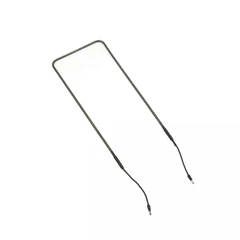

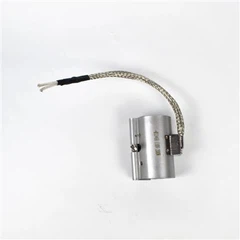

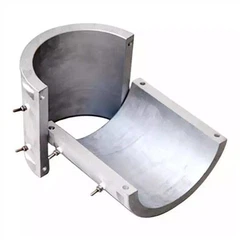





The working principle of the thick-film heater is based on the Joule heating theory, which is the process of generating heat when an electric current passes through a conductor. Here is how the thick-film heater generates heat and operates:
1. Base plate: Thick-film heaters are usually manufactured on ceramic base plates. The substrate provides a stable foundation and excellent heat insulation properties, ensuring that most of the generated heat is conducted outward and does not escape into the surrounding environment.
2. Thick-film paste: Prepare a special type of ink known as thick-film paste. This paste consists of a mixture of fine metal powders such as silver, palladium or platinum, along with glass adhesives and other additives. The paste is then printed or deposited onto the ceramic substrate in specific patterns or designs using a screen printing process.
3. Sintering: After applying the coating material, the substrate is heated to a high temperature. This process is called sintering. During the sintering process, the substrate and the coating material undergo a bonding process. The organic binder in the coating material burns off, and the metal particles fuse together to form a thick film. This thick film is firmly adhered to the substrate.
4. Current When current passes through the thick film, the resistance within the metal particles causes them to heat up. This resistance is a fundamental property of conductive materials: the narrower the current path, the higher the resistance, and the more heat is generated.
5. Heating: When the current flows through the narrow pathways within the thick film, the resistance of the material causes it to heat up rapidly. These heat energies are then transferred to the surrounding environment and can be utilized in various applications, such as heating liquids, gases, or solid objects.
6. Power Application: When the thick-film heater is powered on, the resistive material will generate resistance, thereby producing heat. Then this heat is transferred to the surrounding environment or specific objects to achieve the desired heating effect.
Thick-film heaters are renowned for their flexibility, fast response time, and the ability to provide uniform heating. They are applied in various industries, including electronics, automobiles, medical equipment, and consumer appliances. The customization of thick-film patterns allows for precise control of the heating process, making it suitable for specific and diverse applications.