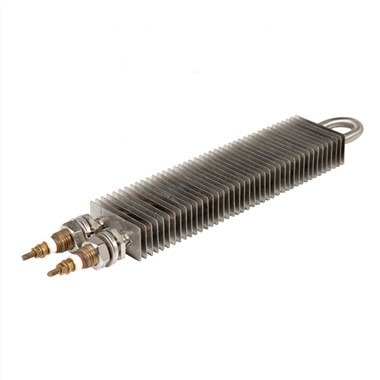









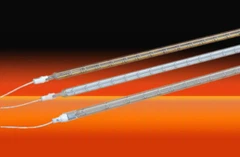


As a supplier of finned heating elements, I've witnessed firsthand the varying performance of these products in different environments. One of the most challenging scenarios is the salt - laden environment, which can significantly impact the functionality and lifespan of heating elements. In this blog, I'll delve into how finned heating elements perform in such harsh settings.
Corrosion Challenges in Salt - Laden Environments
Salt - laden environments, such as coastal areas or industrial facilities with salt - based processes, are notorious for their corrosive nature. Salt in the air or water can accelerate the corrosion of metal components. Finned heating elements are typically made from materials like stainless steel, copper, or aluminum. Stainless steel is often a popular choice due to its relative resistance to corrosion. However, in a salt - laden environment, even high - grade stainless steel can be vulnerable.
The presence of salt creates an electrolyte solution when combined with moisture in the air or water. This electrolyte can initiate an electrochemical reaction on the surface of the finned heating element. The fin structures, which are designed to increase the surface area for better heat transfer, can actually be a double - edged sword. While they enhance thermal efficiency, they also provide more surface area for corrosion to occur.
For example, in a coastal power plant where saltwater is used for cooling purposes, finned heating elements used in ancillary systems are constantly exposed to salt - laden air and water. The salt can accumulate on the fins, leading to pitting corrosion. This type of corrosion starts as small holes on the surface of the metal and can eventually penetrate through the material, compromising the integrity of the heating element.
Impact on Heat Transfer Efficiency
The performance of finned heating elements is closely tied to their ability to transfer heat effectively. In a salt - laden environment, corrosion can have a detrimental effect on heat transfer efficiency. As the fins corrode, their surfaces become rough and uneven. This roughness disrupts the smooth flow of heat from the heating element to the surrounding fluid (air or liquid).


Rust and other corrosion products can act as insulators, reducing the thermal conductivity between the heating element and the environment. This means that more energy is required to achieve the same level of heating, leading to increased operating costs. In industrial applications, where large - scale heating is involved, even a small reduction in heat transfer efficiency can result in significant financial losses over time.
Let's consider a food processing plant located near the coast. Finned heating elements are used to heat the air in drying chambers. As the fins corrode due to the salt - laden air, the heating process becomes less efficient. The plant has to run the heating systems for longer periods or at higher power settings to maintain the desired temperature, which not only increases energy consumption but also puts additional stress on the equipment.
Protective Coatings and Their Effectiveness
To mitigate the negative effects of salt - laden environments on finned heating elements, protective coatings are often applied. These coatings act as a barrier between the metal surface and the corrosive agents. There are several types of coatings available, each with its own advantages and limitations.
One common type of coating is a ceramic - based coating. Ceramic coatings offer excellent corrosion resistance and can withstand high temperatures. They form a hard, durable layer on the surface of the fins, preventing salt and moisture from coming into direct contact with the metal. However, ceramic coatings can be brittle and may crack under mechanical stress.
Another option is a polymer - based coating. Polymer coatings are more flexible than ceramic coatings and can better withstand minor impacts. They also provide good chemical resistance to salt and other corrosive substances. However, polymer coatings may not be suitable for high - temperature applications as they can degrade over time at elevated temperatures.
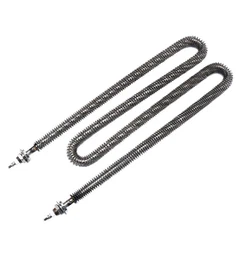
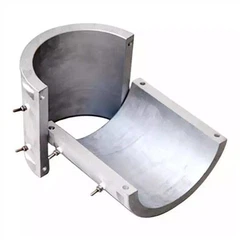
In our experience, a combination of proper material selection and high - quality protective coatings can significantly improve the performance of finned heating elements in salt - laden environments. For example, we've supplied Square Finned Strip Heater with specially formulated ceramic - polymer hybrid coatings to a marine research facility. These heaters have shown remarkable resistance to corrosion, even after years of exposure to the harsh coastal environment.
Performance Monitoring in Salt - Laden Environments
Regular performance monitoring is crucial for finned heating elements operating in salt - laden environments. By closely monitoring key performance indicators, such as temperature, power consumption, and heat transfer rate, early signs of degradation can be detected.
Temperature sensors can be installed to measure the surface temperature of the heating element. A sudden increase in surface temperature may indicate a decrease in heat transfer efficiency, possibly due to corrosion or coating degradation. Power consumption can also provide valuable insights. If the power required to maintain a certain temperature starts to increase steadily, it could be a sign of reduced performance.
In addition to these on - line monitoring methods, periodic visual inspections should be carried out. This allows for the detection of visible signs of corrosion, such as rust spots or physical damage to the fins. By identifying issues early, appropriate maintenance or replacement actions can be taken before the heating element fails completely.
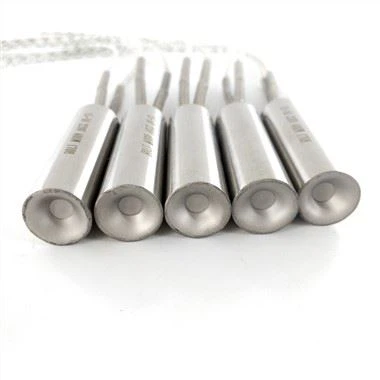
For instance, we've helped a chemical plant near a salt lake implement a comprehensive performance monitoring system for their Hot Air Heating Finned Cartridge Heating Element. Through regular monitoring and timely maintenance, they've been able to extend the lifespan of their heating elements and avoid costly production downtime.
Applications in Salt - Laden Industries
Despite the challenges, finned heating elements play a vital role in many salt - laden industries. In the oil and gas industry, for example, these heating elements are used in offshore platforms for processes such as crude oil heating and pipeline thawing. In desalination plants, finned heating elements are used to heat the feedwater, which is often highly saline.
In the Finned heater for hot air leveling machine applications, which are common in the electronics manufacturing industry, the heating elements need to operate in a controlled environment that may have traces of salt from the manufacturing process. Our products have been designed to meet the specific requirements of these industries, with enhanced corrosion resistance and high - efficiency heat transfer capabilities.
Conclusion and Call to Action
In conclusion, while salt - laden environments pose significant challenges to the performance of finned heating elements, proper material selection, protective coatings, and performance monitoring can help overcome these challenges. Our company, as a leading supplier of finned heating elements, has extensive experience in providing solutions for these harsh environments.
If you are looking for reliable finned heating elements for your salt - laden application, or if you have any questions regarding the performance and maintenance of these heating elements, we are here to help. Our team of experts can provide customized solutions based on your specific needs. Contact us today to discuss your requirements and explore how our finned heating elements can enhance your operations.
References
- Uhlig, H. H., & Revie, R. W. (1985). Corrosion and corrosion control: an introduction to corrosion science and engineering. Wiley.
- Dossett, A. J., & Fong, K. (2007). Handbook of industrial heating. CRC Press.
- Bannister, R. D. (2003). Practical heat transfer for the practicing engineer. Gulf Professional Publishing.