















Calculating the power consumption of a tubular heating element is a crucial aspect for both manufacturers and users. As a tubular heating element supplier, I understand the significance of this knowledge in ensuring efficient and cost - effective operation. In this blog, I will guide you through the process of calculating the power consumption of a tubular heating element.
Understanding the Basics of Tubular Heating Elements
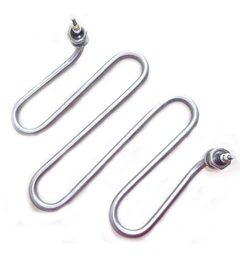
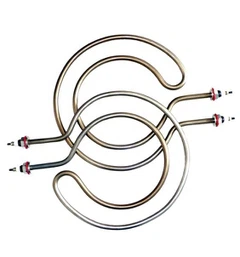
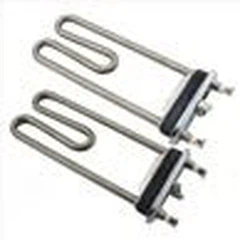
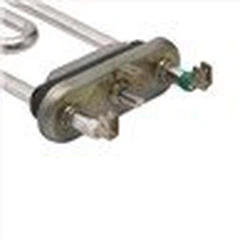
Tubular heating elements are widely used in various industrial and domestic applications. They are designed to convert electrical energy into heat energy. These elements consist of a resistance wire enclosed in a metal tube, which is filled with magnesium oxide powder to provide electrical insulation and heat transfer.
The power consumption of a tubular heating element is determined by several factors, including the voltage applied, the resistance of the element, and the time of operation. The basic formula for calculating power (P) is given by Ohm's law: (P = VI), where (V) is the voltage and (I) is the current. According to Ohm's law, (I=\frac{V}{R}), where (R) is the resistance. So, the power formula can also be written as (P=\frac{V^{2}}{R}).
Factors Affecting Power Consumption
- Voltage: The power consumption of a tubular heating element is directly proportional to the square of the voltage applied. For example, if the voltage is doubled, the power consumption will increase by a factor of four. Therefore, it is essential to ensure that the correct voltage is applied to the heating element to avoid over - or under - heating.
- Resistance: The resistance of the heating element is a key factor in determining its power consumption. A higher resistance will result in lower power consumption, while a lower resistance will lead to higher power consumption. The resistance of a tubular heating element is determined by the material of the resistance wire, its length, and cross - sectional area.
- Time of Operation: The longer the heating element is in operation, the more power it will consume. Therefore, it is important to control the operating time of the heating element to optimize power consumption.
Step - by - Step Calculation of Power Consumption
- Determine the Voltage: First, you need to know the voltage supplied to the tubular heating element. This information is usually provided on the nameplate of the heating element or the electrical system. For example, in a standard household electrical system, the voltage is typically 120V or 240V, while in industrial applications, higher voltages may be used.
- Measure the Resistance: You can use a multimeter to measure the resistance of the tubular heating element. Make sure the heating element is disconnected from the power source before taking the measurement. Once you have the resistance value ((R)), you can use the formula (P=\frac{V^{2}}{R}) to calculate the power.
- Calculate the Power Consumption: Suppose the voltage ((V)) is 220V and the resistance ((R)) of the heating element is 100 ohms. Using the formula (P=\frac{V^{2}}{R}), we have (P=\frac{220^{2}}{100}=\frac{48400}{100} = 484) watts.
- Consider the Operating Time: To calculate the total energy consumption over a certain period, you need to multiply the power (in watts) by the time (in hours) of operation. For example, if the heating element operates for 5 hours, the total energy consumption is (484\times5 = 2420) watt - hours or 2.42 kilowatt - hours.
Applications of Tubular Heating Elements and Their Power Requirements
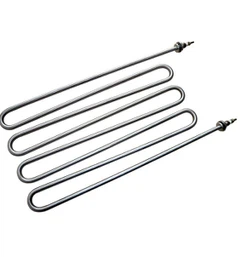
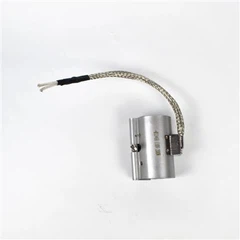
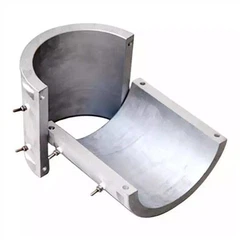
- Tubular Heater For Vulcanizing Press: Tubular Heater For Vulcanizing Press is used in the vulcanization process, which requires high - temperature heating. The power requirements for these heaters depend on the size of the press and the desired temperature. Larger presses may require heating elements with higher power ratings to achieve and maintain the required temperature.
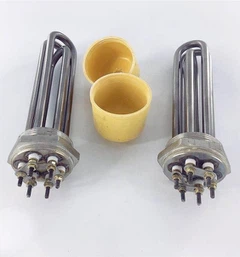
- Anti Corrosion Teflon Coated Immersion Heater: Anti Corrosion Teflon Coated Immersion Heater is commonly used in corrosive environments, such as chemical processing. The power consumption of these heaters is influenced by the volume of the liquid to be heated and the rate of heat transfer. A larger volume of liquid will require more power to heat up.
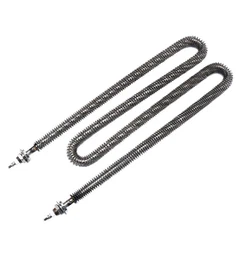
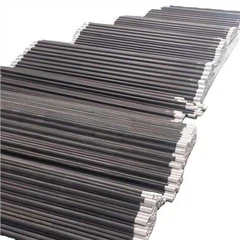
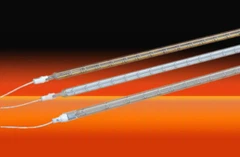
- Tubular Heater For Vacuum Atmosphere Furnace: Tubular Heater For Vacuum Atmosphere Furnace is designed to operate in a vacuum environment. The power requirements for these heaters are determined by the furnace size, the desired temperature, and the insulation properties of the furnace. Higher - temperature applications will generally require more power.
Tips for Reducing Power Consumption
- Optimize the Operating Temperature: Set the operating temperature of the heating element as low as possible while still meeting the process requirements. Lowering the temperature by a few degrees can significantly reduce power consumption.
- Use Energy - Efficient Heating Elements: Choose heating elements with high - efficiency designs. For example, some heating elements are designed to have better heat transfer properties, which can reduce the power required to achieve the same temperature.
- Implement Temperature Control Systems: Install temperature control systems to ensure that the heating element operates only when necessary. These systems can automatically turn off the heating element when the desired temperature is reached, thereby reducing power consumption.
Conclusion
Calculating the power consumption of a tubular heating element is essential for efficient and cost - effective operation. By understanding the factors that affect power consumption and following the steps outlined in this blog, you can accurately calculate the power requirements of your heating element. Whether you are using a Tubular Heater For Vulcanizing Press, an Anti Corrosion Teflon Coated Immersion Heater, or a Tubular Heater For Vacuum Atmosphere Furnace, proper power calculation will help you optimize your energy usage.


If you are interested in purchasing tubular heating elements or need more information about power consumption calculations, please feel free to contact us for further discussion and negotiation.
References
- Ohm, G. S. (1827). Die galvanische Kette, mathematisch bearbeitet. Berlin: T. H. Riemann.
- Incropera, F. P., & DeWitt, D. P. (2002). Fundamentals of Heat and Mass Transfer. John Wiley & Sons.


