






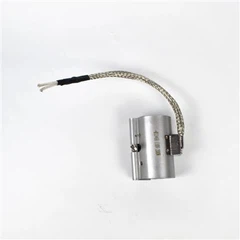

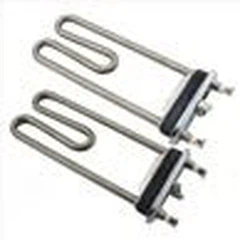
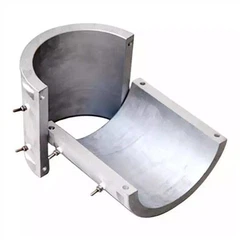







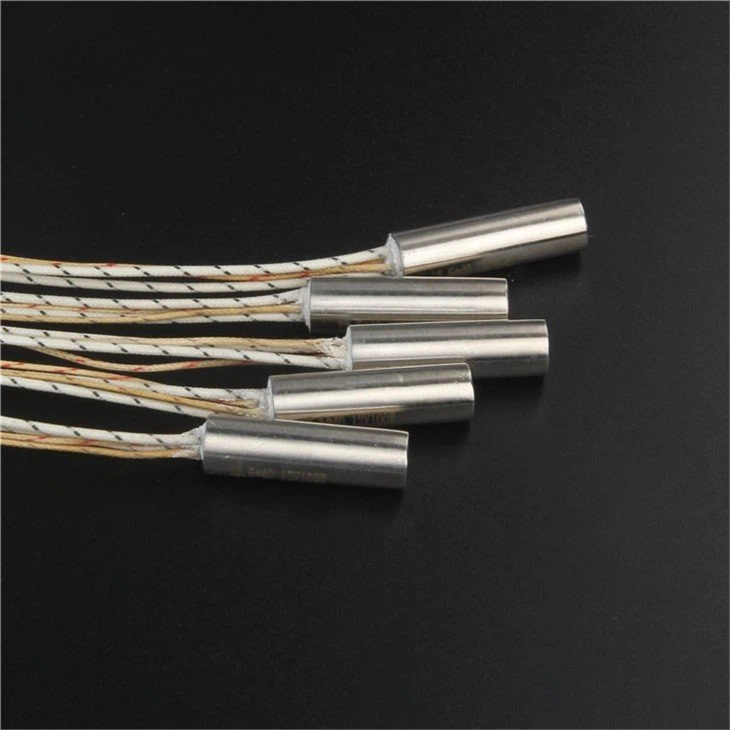
Description
The warranty life of a cartridge heating element is determined by how quickly the heat generated in the resistance wire can be dissipated to the outside sheath. To accomplish a useful life of the cartridge heater, two methods of manufacturing cartridge heaters are available; STANDARD cartridge heaters and SWAGED cartridge heaters. Although both type look the same, the internal construction is very different.
STANDARD CARTRIDGE HEATER
Nichrome wire heating coils are inserted in holes formed in ceramic tubes. Pure magnesium oxide filler is vibrated into the holes housing the heating coils to allow maximum heat transfer to the stainless steel sheath. The heater then has a heliarc welded end cap inserted on the bottom of the heater and insulated leads are installed.
SWAGED CARTRIDGE HEATERS
Nichrome wire is wound around a ceramic core which situates it in close proximity to the heater sheath. Pure magnesium oxide (MGO) is then vibrated in and the heater is swaged to a specific diameter. This compresses the MGO so it becomes an improved conductor of heat from the wire while maintaining its dielectric properties.
According to the using application ,the cartridge heater can be as follow:
Air using cartrdige heater element
First of all, ensure that the installation location ventilation is good, so that the heat emitted by the surface of the heating cartridge can be quickly transmitted out. The cartridge heating element with high surface load is easy to cause high surface temperature in the environment of poor ventilation, which may cause the pipe to burn out.
Liquid using cartridge heater
It is necessary to select the heating pipe according to the medium of heating liquid first, especially the corrosion solution should be selected according to the corrosion resistance characteristics of the material. Secondly, the surface load of the heating tube should be controlled according to the medium of heating liquid.
Pls view our article about how to choose the right material for cartridge heater
Mold using cartridge heater
Reserve mounting holes on the mold according to the size of the cartridge heater.(or customize the outer diameter of the heating element according to the size of the mounting hole). Minimize the gap between the heating pipe and the mounting hole.
Many people have doubts when it comes to the surface temperature uniformity of mold heating . Because the uneven temperature distribution will cause the material to deform or scorch, thus affecting the production. However, with the development of technology, cartridge heating element can now provide a more uniform temperature distribution than ever before.
The structure of the cartridge heater element is one of the key factors, which includes the heating wire, the filling material, the jacket and the terminal head. Among them, the filling material is an important factor affecting the temperature uniformity.
Magnesium oxide powder is a commonly used filling material in mold heater. It has good thermal conductivity and insulation properties. Therefore, when the cartridge heater is working, the magnesium oxide powder can help the heating wire transfer heat, so that the heating rod surface temperature is more uniform.
In addition, the density of the filling material also affects the temperature uniformity. If the filling material is too dense, heat may be concentrated in certain parts of the cartridge heater element, resulting in uneven temperature. Therefore, in the design of cartridge heater element, the density of filling materials need to be reasonable arrangement.
CARTRIDGE CARE AND MAINTENANCE
1. Store heaters in a dry area, especially during periods of high humidity.
2. Protect leads from abrasion, abuse, and exposure to contaminants such as grease and plastic drool.
3. Maintain temperature control and keep accessories in good working condition to obtain correct operating conditions.
4. All cartridge heaters have hygroscopic tendencies and can accumulate moisture in shipping and storage.
Heaters with low di-electric insulation values (less than 1 meg ohm) can be baked in an oven for several hours or started at low voltage to eliminate moisture.
Data Sheet
Sheath Material | SUS 304/316/ Incoloy 840 |
Spirals | Nickel - Chrome |
Insulation | Magnesium Oxide Powder |
Voltage Supply | 12V to a maximum of 480V |
Maximum Temperature | 750 °C |
Resistance Tolerance | +10% - 5% |
Wattage Tolerance | +5% - 10% (closer tolerances are available upon special request) |


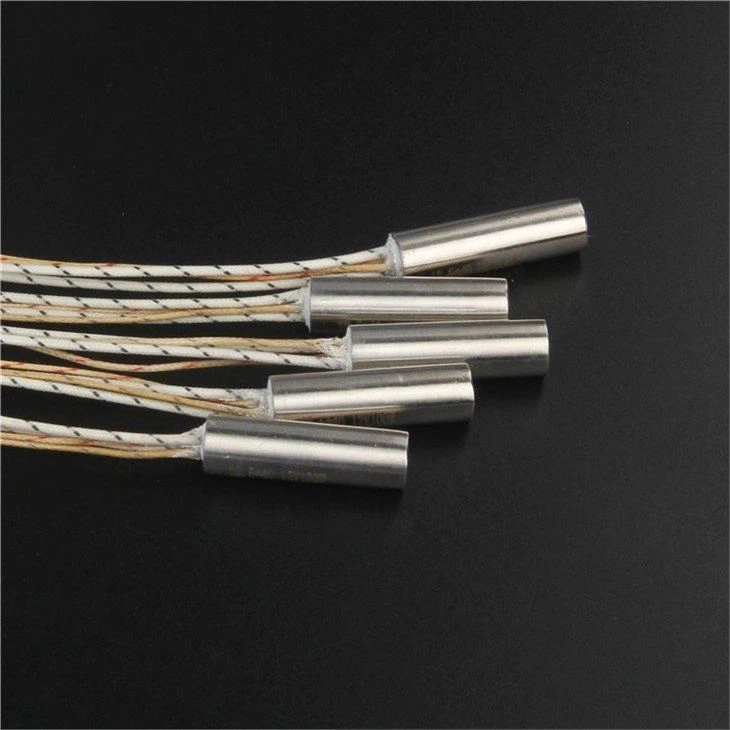
What's the difference between internal (swaged in) and external (crimped on) wiring construction of cartridge heater?
The difference between external wiring and inner wiring construction can be clearly seen from the above figure.
External wiring construction is that the lead wires are connected with conductor pin by end crimps outside the heater, and internal wiring construction is that the lead wires are connected inside the heater.
The external wiring construction usually uses fiberglass sleeves to prevent the connection part from bending too much, and to increase insulation protection.
Application
1. Heating of Mould Tools
2. Tooling
3. Packaging Machinery
4. Heat Sealing Equipment
5. Plastic Process Machinery
6. Food Process Machinery
7. Catering
8. Printing
9. Hot Foil Printing
10. Shoe manufacturing Machinery
11. Laboratory / Test Equipment
12. Vacuum Pumps

Hot Tags: stainless steel cartridge heating element, China, suppliers, manufacturers, factory, customized, wholesale, free sample, made in China, Extrusion Press Cartridge heating element, Mini Cartridge heating element, DC Water heating element, fast heat cartridge heating element, 24V DC Immersion Heater Element, High Performance 5v 12v 24v 48v Dc heating element


