














Description
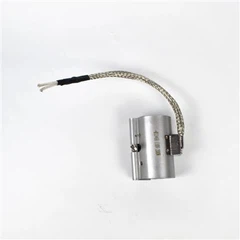
The cartridge heater with inner lead wire is fine, and the high-temperature wire resistant to 450 degrees is directly drawn from the inside of cartridge heater. Compared with the ordinary cartridge heating element, the port part does not adopt the terminal connection mode, so that it has high temperature resistance and strong mechanical properties, which is suitable for embedded heating and vibration of the mold.
The inner lead wire adopts an innovative internal wiring design, reducing the risk of wear and poor contact of traditional external wiring. Its internal wiring structure not only enhances safety but also maintains an overall simple appearance. This cartridge heating rod is suitable for occasions with compact space or high appearance requirements, such as laboratory equipment, precision instruments and medical equipment. Meanwhile, its internal protective layer can effectively prevent moisture and dust, thus prolonging its service life
The inner lead wire means the wire is directly led from the inside of the cartridge heater. This structure directly avoids the problem of easy falling off and breaking of the external connection. However, due to the inner lead structure, the lead is directly led from the inside of the tube, so the inner lead is generally purchased with high temperature resistant pure nickel wire. Therefore, the cost will also be very high.
There are several bad things you can do to a cartridge heater (any heater actually) that may damage it or shorten its life. Let us look at heater abuse and things to avoid.Don't let contamination get onto a heater, especially near the lead-wires or screw terminals. Even a dry contaminant could liquefy when heated and get to where it's not supposed to. Try to hold and transport heaters by handling the heater body. It's very tempting to handle a heater by its lead-wires, and often there's no problem in doing so, but it's good to get into a habit of handling heaters by their bodies to avoid possible damage to the lead wire connections. If the heater was powered, obviously, wait for the heater to cool down before handling!
In the process of using, the lead of the cartridge heater will be burned, which will affect its normal use and may even cause safety hazards.
The main causes of the lead wire burnout are as follows:

1. The leads wire are in poor contact
If the lead wire of the cartridge heater is in poor contact or the contact point is affected by corrosion, oxidation and other factors, it will lead to overheating when the current passes through the lead, thus burning the lead.
2. Overload use
Overload is one of the main causes of lead wire burnout. If the 220V is connected to the 380V power supply, or the cartridge heater with too much power is used in the small-capacity heater, it will cause the heating element to be subjected to too much current and power load, which will increase the lead temperature and eventually burn out.
3. The working environment of the cartridge heater element is bad
If the working environment of the heating cartridge, such as the temperature is too high, the humidity is too high, etc., the insulation material inside the cartridge heating element will be damaged, making the current flow around the heating wire through the lead, and then lead to burn off.
More info about the difference of inner lead and outer wiring for the cartridge heater,please view the article the difference between the inner lead and outer wiring for the cartridge heater
If the cartridge heater element is used for a long time, if the surface gathers thick pipe scale and oil scale, it should be removed regularly, otherwise it will reduce the heat transfer performance and cause the heat load of the tube surface to exceed the rated permit and be damaged.The heating area should be fully immersed in the heating medium to avoid the loss of heat and exceed the allowable heating temperature and damage the cartridge heating element.
Cartridge heating element should be kept clean and dry, otherwise it will reduce the insulation performance and be short-circuit breakdown, if the application of chemical corrosion, flammable, explosive and other liquid or gas environment, the wiring part should be strictly protected with insulation sealing device to prevent accidents.
About Cartridge Heater Diameter
If you measure the actual diameter of a cartridge heater, it won't be the same as its specified diameter (i.e., a 1/2" diameter cartridge heater won't measure 0.500"... ever). The reason for that is simple: the heater must fit a (carefully) bored hole. The typical design process goes something like this (when heating "blocks" of steel, aluminum or other materials): Determine the total power required; Figure out how to distribute the power; Determine the optimal length and diameter to achieve even heating.
the wire will be broken when the cartridge heater is working and heating,we must know the causes and check the below termination
ERMINATION LOCATION


For more info about the leadwire for the cartridge heater,please check the below article link:
The difference between the inner lead and outer wiring for the cartridge heater
Data sheet
| Resistance heating wire | NiCr 80/20 wire |
| Wattage Tolerance | +5%, -10% |
| Resistance tolerance | +10%, -5% |
| Length tolerance | ±1 mm |
| Diameter tolerance | -0.02mm |
| Standard Cold Zone | 5-10mm |
| Insulation resistance (cold) | ≥ 500 MΩ |
| Maximum leakage current (cold) | ≤ 0.5 mA |
| Thermocouple Location | type J / K / Ground wire |
Packing

Hot Tags: cartridge heater with inner lead wire, China, suppliers, manufacturers, factory, customized, wholesale, free sample, made in China, External Connection Lead Wire Cartridge Heater, Industry Mold Cartridge Heater Heating Element, pellet stove ignition heaters, Customized Threaded Cartridge Heating Element, 24V DC Thread cartridge heating element, DC pencil heating element


